
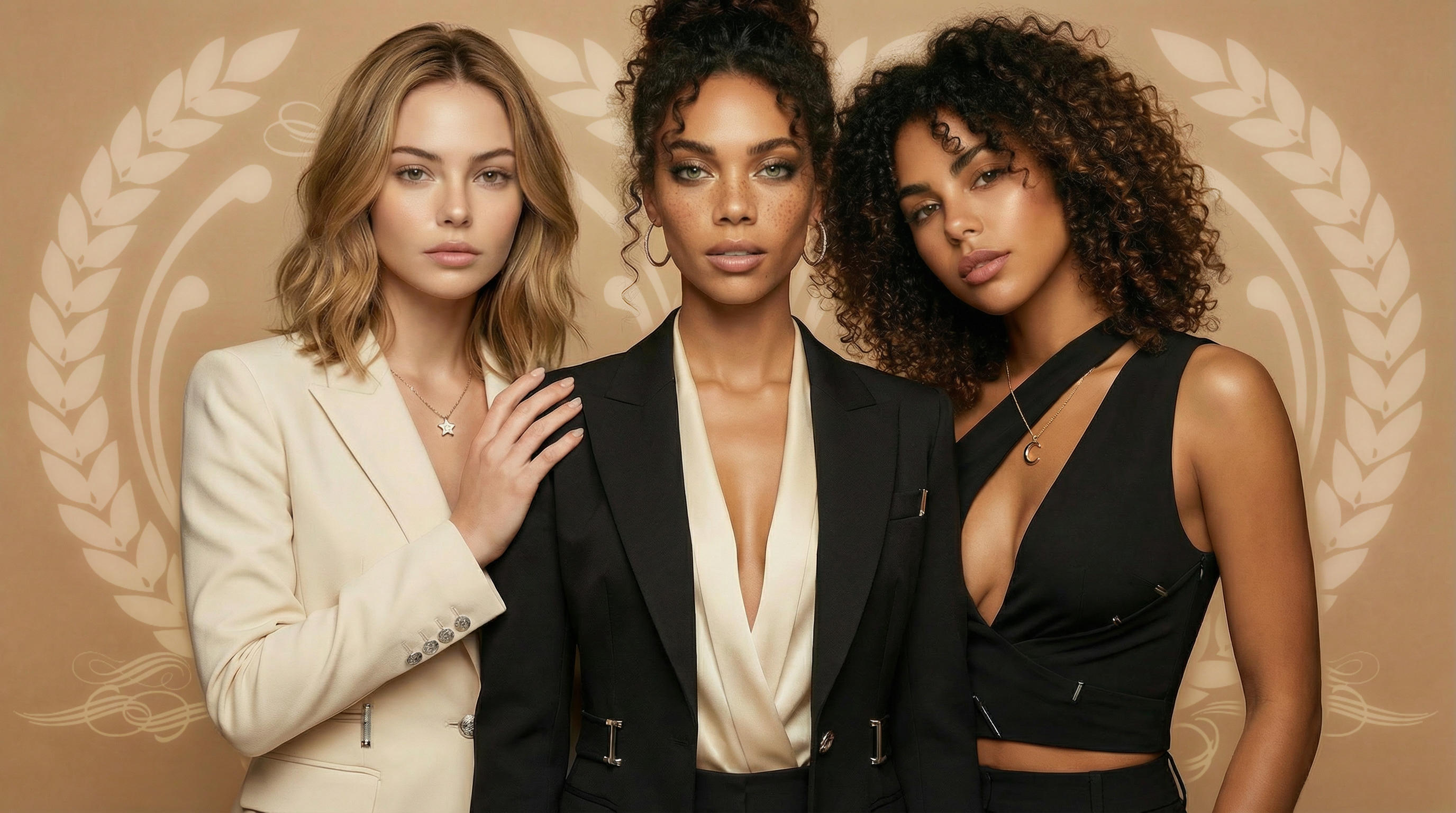
Luxury doesn't need a diva anymore because AI fashion models, digital twins, and virtual influencers give brands perfect control.
High Fashion Just Found A Muse It Can Own
High fashion has always claimed it worships "art," but what it really worships is control, and that's why the industry is quietly falling in love with AI fashion models while the old guard clutches pearls and calls it a "soulless takeover." We've watched Hollywood and luxury branding sell authenticity like a perfume sample for decades, then act offended when the same illusion gets automated, like they didn't spend the last twenty years photoshopping pores out of existence, smoothing jawlines into fiction, and scripting personalities like press releases.
If the product is an aesthetic, then the model was never "authentic," the model was a delivery mechanism, and the only difference now is that the delivery mechanism doesn't need a trailer, a mood, or a crisis manager on standby. The funniest part is how the panic always pretends this is about morality, when most of it is about money, speed, and ownership, which are the only three things luxury houses truly protect like family heirlooms.
So yeah, the diva era is ending, not because humans are suddenly irrelevant, but because brands have finally found something they can buy once and deploy forever.
Authenticity Was Already A Costume
Let's get something straight before we start pretending the runway is a sacred temple: fashion has never been "raw," and celebrity culture has never been "real," even when it wore a human face. The entire machine has always been manufactured performance, from the lighting to the angles to the retouching to the PR-friendly captions that sound like a therapist wrote them on commission.
When legacy models and actors claim AI is stripping the "soul" out of fashion, they're basically admitting their job was to be the soul-shaped decoration on top of a product launch, which is brave honesty, but also, come on. High fashion doesn't sell reality; it sells fantasy with receipts, and for years that fantasy has been powered by human beings who were edited, directed, and brand-managed so aggressively they might as well have been living versions of a mood board.
AI isn't killing authenticity in fashion, it's exposing that authenticity was a brand asset, not a human trait, and the industry was already comfortable treating bodies and identities like interchangeable canvases as long as the campaign looked expensive.
Why Rent A Liability When You Can Own The Asset
This is where the conversation stops being emotional and starts being inevitable, because the economics of "diva culture" are brutal when you zoom out. A luxury campaign is high stakes, global, and time-sensitive, which means every unpredictable human variable becomes a risk multiplier, and risk is the one thing brands hate more than discount racks.
A human model can be late, can get sick, can age out of a look, can change their vibe, can clash with the creative director, can post something messy, can get dragged into a scandal, or can simply decide they're not feeling the concept, and now your six-figure shoot day is burning while the team tries to salvage a narrative.
An AI model, by contrast, is an owned asset that can be rendered at 3 a.m. for a Tokyo deadline, revised at 7 a.m. for Paris, and reissued at noon for New York, all without "creative differences" turning into schedule collapse. The cold truth is that fashion doesn't pay for your humanity; it pays for your usefulness, and an AI fashion model is useful in the most corporate way imaginable: consistent, controllable, infinitely re-usable, and protected from the chaos of being a person.
Digital Twins Vs Pure Virtual Models
There are two lanes here, and both lead to the same destination, which is why we treat this shift like an industry migration instead of a novelty trend. Digital twins are the "safe transition" lane, where brands scan real humans to create controlled digital doubles that can be used across campaigns, fittings, localisation, and quick content variations without needing the physical model on set every time.
Pure virtual models are the bolder lane, where the "person" is never a person at all, just a designed identity that can be tuned to a brand's taste, aesthetic era, and cultural posture with the precision of product design. The twin lane will soothe the public because it still smells like reality, while the pure virtual lane will win in the long run because it removes dependency entirely, and luxury loves nothing more than removing dependency while still charging premium.
Either way, the end result is the same: the model becomes a platform, and the platform becomes a product that can be managed, protected, and monetised with far less friction than a human career ever allows.
Industrial Luxury And Why Code Wears Couture Better
This is the part where people get mad because it sounds "inhuman," but we're not here to comfort feelings, we're here to describe what's happening. High fashion is moving toward what we call Industrial Luxury, where the texture quality, silhouette discipline, lighting control, and editorial coherence become so precise that the human imperfections stop reading as "authentic" and start reading as "unpolished."
When the clothing is the art and the campaign is the gallery, the canvas doesn't need to be biological, it needs to be flawless, and a digital supermodel can be mathematically consistent in ways a flesh-and-blood celebrity simply cannot. This is also why the creative pipeline matters, because the tools now exist to build a luxury-grade muse end-to-end, from the master image to the variations to the motion content, and the result can look more expensive than half the campaigns we've seen that relied on famous names as a substitute for vision.
That's why we're not shocked when digital faces start defining "the look," and it's why Tanizzle's own world-building matters (learn more about the Tanizzle Galaxy), because characters like Kathleen Range, Melissa Vogue or Raquel weren't built to imitate yesterday's celebrity machine, they were built to represent the next standard where the aesthetic is untouchable and the identity is owned.
And oh, if you're wondering who Kathleen, Melissa, and Raquel are, they're Tanizzians (AI) - aka Tanizzle Galaxy characters created and controlled by us, literally. Watch the official Tanizzle Studios Trailer (The Signal) 2026 to see them in action.
The Tanizzle BAE Layer And The New Taste-Makers
Now let's talk about what's actually happening culturally, because this shift isn't just a pipeline upgrade, it's a new power structure. When a brand can create or licence a digital muse, it can also create a new type of status symbol: not "we hired a famous person," but "we own a face the internet can't stop staring at," which is an entirely different kind of flex - let's not act like Tanizzle doesn't support that Baddie Energy; we always will.
This is where Tanizzle BAE used to sit comfortably as a label—Baddie and Elite, our little corner of curated digital mystique - until the mainstream platforms started getting allergic to anything that sounds too spicy, too direct, too honest, which is why we treat the label as culture rather than a dependency on algorithms. If we want to go harder, we go BAE Extreme, which isn't about being explicit for cheap attention, it's about pushing the aesthetic into that untouchable high-fashion territory where the look is so controlled, so premium, and so intentional that it stops reading like "content" and starts reading like a brand universe.
That's why baddies like the mouthwatering Eliza Rose Watson and Amirah Dyme matter in our ecosystem, because when we build pages that rank and we build characters that hold attention, we're not just writing about a trend, we're practising it, and we're building a reputation layer that search engines and audiences can't ignore.
What This Means For Humans In Fashion
Here's the part the panic merchants always skip: this is not a clean "humans replaced" story, it's a "humans re-positioned" story, and the difference matters. Humans will still be the designers, stylists, directors, editors, choreographers, photographers, set builders, and taste architects who make the work feel like something, but the visible face of the campaign is becoming less of a sacred individual and more of a controllable interface.
That will hurt some careers, just like every industrial shift hurts careers, but it will also expose how many human models were treated like disposable assets by the same industry that now claims to care about "souls." If you want a real ethics conversation, it's not "AI is evil," it's consent, licensing, exploitation, and whether the people whose likenesses are being scanned and simulated are being paid fairly and protected contractually, because the technology isn't the villain, the business incentives are.
If fashion wants to be grown-up about this, it should build new standards around consent and compensation, not beg for government bans that conveniently protect monopolies and legacy gatekeepers. The public doesn't care if the model is breathing; they care if the aesthetic is fire, if the story feels premium, and if the brand looks like it knows what decade it's in.
Adapt Or Get Left In The Dressing Room
So yes, the diva era is dying, not because glamour is dead, but because glamour has been upgraded into something brands can replicate perfectly on demand. If you're a legacy celebrity trying to guilt-trip the audience into caring about your contract losses, you're late to your own plot twist, because the industry you benefited from was never sentimental about people, it was sentimental about results.
AI fashion models, digital twins, and virtual influencers are the logical next step for brands that want more control, more speed, more safety, and more aesthetic consistency, and they're already becoming the new standard because the incentives are stacked like diamonds. The only move now is to adapt, build new roles, claim new lanes, and stop pretending the old system was fair or "authentic" when it was basically a human-shaped production pipeline wearing couture.
The dressing room door is closing, and code is already on the runway.
Tanizzle Says: The Diva Era Didn't End - It Got Upgraded
The industry isn't choosing AI because it hates humans, it's choosing AI because luxury brands love control more than they love celebrity, and control is the one thing a digital muse delivers without excuses.
If you want to survive this era, stop begging for AI restrictions and start building taste, because the future belongs to the people who can craft worlds, not the people who can only show up to a set and be photographed inside someone else's vision.
From Tanizzle: For You
If you want the blunt reality behind the current outrage cycle, our breakdown of AI fear politics and the hypocrisy surrounding it cuts straight through the noise, and it's worth reading before you let anyone sell you a manufactured panic. Learn about the AI panic and the stupidity surrounding it.
If you're still stuck in the "AI replaced everything overnight" fantasy, our piece on why people misunderstand artificial intelligence is the antidote, because it explains the gap between what these tools actually do and what the internet keeps screaming about. Here's the one thing everyone gets wrong about AI.
And if you want the closest cousin to this fashion shift in pure relationship culture, our synthetic lover story shows how quickly people bond with digital personas when the aesthetic and the intimacy feel curated enough to be believable. Succumb to Signal Lost 2 - the rise of the synthetic lover.
Tanizzle FAQs: AI Fashion Models And Digital Supermodels
What are AI fashion models?
AI fashion models are digitally generated or AI-assisted model identities used in campaigns, lookbooks, and social content, either as fully virtual characters or as digital doubles based on real people.
Are brands replacing human models with AI?
Some brands are experimenting with AI models and digital twins because they reduce scheduling risk and enable faster production, but the shift is uneven and depends on brand strategy, budget, and audience response.
What is the difference between a digital twin and a virtual influencer?
A digital twin is usually a scanned or simulated version of a real person used for controlled content production, while a virtual influencer is often a fully designed digital persona that can be managed like a brand asset.
Why would luxury brands prefer AI models over celebrities?
Luxury brands prefer controllable assets because they lower reputational risk, allow infinite revisions, and keep campaigns consistent across regions and time zones without the unpredictability of human logistics.
Is generative AI making fashion campaigns cheaper?
Generative AI can reduce costs by limiting on-set time and enabling rapid iteration, but high-end results still require skilled direction, styling, and post-production to look genuinely premium.
Will AI models make fashion less authentic?
Fashion authenticity has always been curated, and AI models mainly change the production method rather than the intention, although ethical issues like consent and licensing become more important as realism increases.
How can human models adapt to the rise of AI fashion models?
Human models can adapt by specialising in live runway performance, experiential campaigns, brand partnerships that rely on real presence, and licensing arrangements where their likeness is used ethically and profitably.
What does "Industrial Luxury" mean in fashion?
Industrial Luxury is the idea that high-fashion aesthetics become more controlled, precise, and consistently premium when digital tools allow near-perfect execution of lighting, textures, silhouettes, and brand identity.