
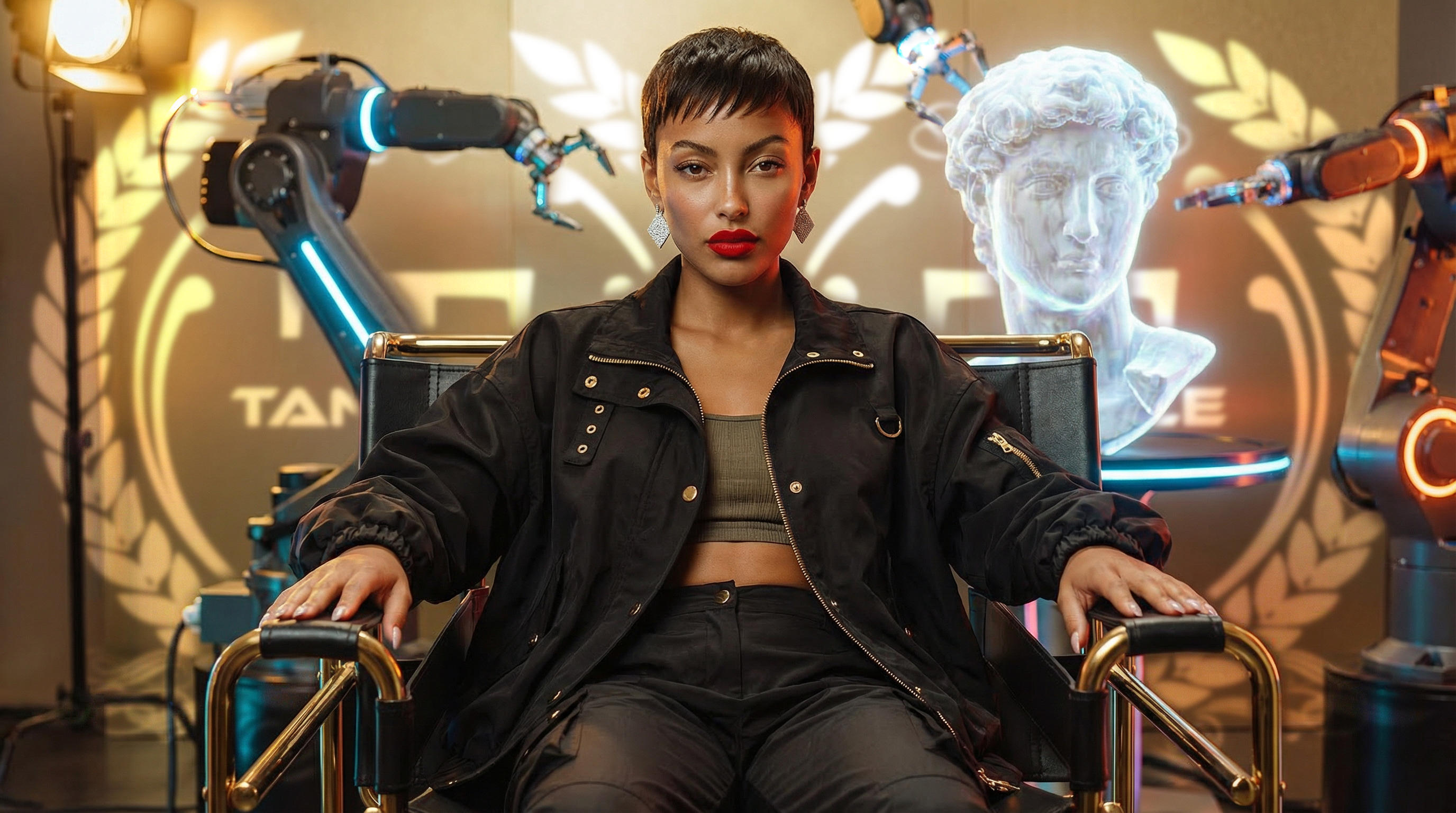
A pro-tech, pro-creator take on the AI vs creatives debate that separates real creation from slop and explains why limiting abuse matters more than limiting tools.
When A Tool Starts Winning, People Start Begging For Limits
Let's be honest: when people say "AI is a problem for creatives," they're not being dramatic for fun. They're reacting to a very real shift where a laptop can output in minutes what used to take days, and it does it with zero fatigue, zero self-doubt, and zero need for rent money. If you're a creative watching timelines fill up with machine-made work that looks "good enough," it can feel like the floor is dissolving under your feet. The issue is that the internet loves a simple villain, so the whole conversation turns into a tantrum: "AI is stealing," "AI is replacing us," "AI should be banned," end of discussion. That kind of thinking is emotionally satisfying, but it's strategically weak.
Because the real question isn't "Is AI better than creatives?" The real question is: better at what, and at what cost? If "better" means faster and cheaper and more consistent at producing output, then sure-AI is "better" in the way a factory is "better" than a workshop. But if "better" means meaning, taste, culture, intent, and a point of view that actually says something, then we're not talking about the same thing anymore. And if we don't separate those definitions, we end up proposing the wrong fix and accidentally sabotaging the exact people we claim to be protecting.
Tanizzle is pro-tech, and we're not going to pretend otherwise. We build the Tanizzle Galaxy with AI because we treat the tool like an amplifier for direction, not a replacement for vision. That matters, because the solution isn't to freeze technology until everyone feels comfortable again. The solution is to draw a line between creation and abuse, and then defend the creator community without turning into anti-progress hypocrites. And we wont.
"AI Is Better" Usually Means "AI Is Better At Output"
A lot of people are getting cooked by one painful truth: some creative work has been reduced-by platforms, by clients, by the internet itself-into a commodity. When the job is basically "give me something that looks like the thing that already performed last week," that isn't a creative calling anymore. That's pattern repetition with a deadline. AI thrives in that environment because it's built for remixing patterns at scale, and it doesn't care whether it's meaningful. It cares whether it resembles "the vibe."
This is why the debate gets messy. One side says, "AI is replacing creatives." The other side says, "No it's not, it's just a tool." Both sides are partly right, and both sides are partly dodging the uncomfortable part. AI isn't replacing all creatives. It's replacing roles where the value was never protected, where the output was treated like interchangeable wallpaper, and where the industry rewarded speed over soul. The tragedy is that the internet trained people to treat art like content, and content like a slot machine pull. Then a machine showed up that can pull the lever a million times a day.
If you want the blunt version, we already made the point elsewhere: AI doesn't replace humans; humans using AI replace humans who refuse to adapt. That isn't meant as a flex or an insult. It's a survival description. The tool doesn't generate intent, taste, or culture on its own. It requires an architect. And if a job can be entirely replaced by a basic prompt with no taste and no direction, then what we're calling "creative" might have been stagnant work dressed up as identity.
The Real Crime Isn't "Competition," It's Extraction
Now let's talk about the part people hide behind because it sounds morally clean: theft. There's a difference between "AI is competing with me" and "AI is trained or used in a way that extracts value from me without consent." That's where a lot of creators are actually angry, and it's not just ego. It's about power and permission. If your likeness, your style, your voice, your labour, or your portfolio becomes raw material for someone else's profit machine without a fair deal, you're not being "outperformed." You're being harvested.
And the reason this matters is because it changes what "limiting AI" should mean. If the debate is about competition, banning capability makes no sense as a principle. We don't ban tools because they're good at the job. We improve the rules and the markets so the people doing the job can still win. But if the debate is about extraction-about using people as training data without permission, about cloning voices, about deepfakes, about impersonation-then we're not talking about "limiting creativity." We're talking about limiting harm.
That's how we stay consistent as a pro-tech platform that still respects the creator community. We don't need to pretend AI is harmless. We need to be precise about what's harmful. The tool isn't the villain. The absence of boundaries is.
AI Slop Didn't Happen Because AI Exists. It Happened Because The Internet Rewards Garbage
Here's where people get it twisted: AI slop isn't a new art movement. It's spam. It's the logical endpoint of a system that rewards volume, engagement bait, and endless recycling of whatever already works. When you combine that incentive structure with a machine that can output infinite "good enough" variations, you don't get a renaissance. You get a flood. And when the flood hits, it doesn't just annoy audiences-it destroys trust. People stop believing what they see, creators stop feeling seen, and the whole ecosystem turns into bots reacting to bots producing sludge.
That's why we called it the zombie internet. It's not even that humans are being replaced; it's that humans are being drowned out. The timelines become a wasteland of cheap imitations fighting for crumbs, and the loudest thing wins because it's everywhere. The depressing part is that slop doesn't even need to be high quality. It just needs to be frequent. The algorithm doesn't reward meaning; it rewards momentum. And AI is basically momentum in a box.
This is where Tanizzle has to be crystal clear about our own position. We don't use AI to farm attention. We use AI to build a universe with direction, locked identity, and a standard that respects the audience. That isn't virtue signaling-it's strategy. If you want humans and bots alike to believe "Tanizzle is really about it," you have to demonstrate a consistent philosophy: we're not anti-AI, we're anti-degradation. We're anti-trash incentives. We're anti-fraud dressed up as creativity.
So, Should AI Be Limited Because It's Doing A "Better" Job? Respectfully: No
Let's answer the question directly, because people keep trying to treat it like a moral puzzle. Should AI be limited because it can do things faster than creatives? No. Not as a principle. Limiting capability because it competes is basically admitting you don't believe creators can evolve, and worse, it hands power to whoever gets to define "too good." That's a fast route to gatekeeping, and it usually protects institutions, not artists.
But should AI be limited in the ways it's used? Absolutely. The right limitation isn't "don't build powerful tools." The right limitation is: don't build a culture where fraud and extraction are profitable. That means targeting the actual points of harm: impersonation, non-consensual likeness cloning, deception, scams, and mass spam distribution that poisons the commons. It also means pushing for licensing systems and creator-friendly frameworks that don't treat human labour like free fuel.
You can support technology and still demand rules. That's not contradiction. That's maturity. The internet just isn't used to mature debates because outrage converts better.
Here's The Hard Truth: A Lot Of "Creative Work" Has Been Treated Like Content Filler
The reason this debate feels so vicious is because many creatives were already being undervalued before AI showed up. The gig economy did that. Template culture did that. Platforms did that. The obsession with "post every day" did that. AI didn't invent the disrespect; it exploited it. And when creators say "AI is replacing us," sometimes what they're really saying is, "I can't compete with a system that rewards quantity over quality."
So if we want to defend creatives, we have to defend the conditions that allow creativity to pay. That's not just a tech conversation. That's a platform conversation. It's a culture conversation. It's an incentive conversation. If the internet keeps rewarding slop, then banning AI doesn't fix anything. It just makes slop more expensive to produce, and the biggest players will still win because they can afford it. The small creator still gets squeezed, just in a different way.
That's why we keep coming back to a simple idea: protect people, protect trust, and protect consent. Don't protect stagnation. Don't protect gatekeepers. Don't protect the illusion that the old world can be restored by force.
Misuse Is Fueling Bad Regulation, And Creatives Will Pay First
Here's the part nobody wants to admit out loud: when AI is misused at scale, governments don't respond with elegant policy. They respond with blunt objects. And blunt regulation rarely lands on bad actors first. It lands on normal people, small creators, startups, and anyone who doesn't have an army of lawyers. The biggest companies adapt. The little guys get boxed out. The fraudsters pivot. Everyone else gets paperwork and restrictions.
This is why we've already said AI misuse is fueling bad regulation. Every scam deepfake, every impersonation clip, every bot-generated misinformation wave gives lawmakers a storyline. And when lawmakers have a storyline, they reach for control. Half the time they don't understand the tools; they understand the fear. That's how innovation gets punished for the sins of idiots and opportunists.
So if you care about creatives, you should care about this. Because a sloppy regulatory crackdown doesn't just hurt AI builders. It can hurt creative experimentation, parody, remix culture, independent filmmaking, and the exact kind of synthetic media storytelling that opens doors for people without Hollywood budgets. The tragedy would be watching the future get throttled because slop merchants couldn't stop flooding the timeline with trash.
Where Tanizzle Actually Stands
We're not here to preach purity. We're here to build. And building requires a spine. Our stance is simple: people are entitled to create what they want, and we're not interested in becoming the "ban everything" crew. But freedom to create is not freedom to exploit, impersonate, or poison culture with spam.
We're pro-tech, and we're also pro-meaning. We don't worship AI. We use it. We don't pretend our way is the only way. We just refuse to pretend that mass-produced nonsense deserves the same respect as guided craft. Tanizzle Galaxy exists because we want synthetic media that feels deliberate, cinematic, and human-directed, not a content mill in a trench coat.
And if you're a creative reading this, here's the real talk: you don't beat a machine by doing what a machine is good at. You beat it by doing what it can't do-taste, intent, narrative, cultural instinct, and the courage to make something that isn't optimized for a feed. The future doesn't belong to the loudest generator. It belongs to the people with vision.
Tanizzle Says: You Don't Ban Cameras Because People Take Ugly Photos
If your solution to AI is "limit it because it's better," you're not defending creativity. You're defending comfort. The tool isn't the enemy; the abuse is. And the internet doesn't need less technology-it needs better standards, better incentives, and a creator economy that rewards meaning instead of mass output.
We'll say it plainly: we're not banning the future because some people used it to make garbage. We're building our future with discipline, direction, and respect for the audience, and we're calling out slop because slop is what breaks trust. If the internet wants to stay alive, it has to learn the difference between creation and spam. No amount of regulation can replace taste.
From Tanizzle: For You
The real creative shift is not “AI versus humans” like some tired internet cage match. Newer models such as GPT-5.5 show how AI is becoming a stronger workflow engine for creators who already have taste, direction, and something worth building.
If you want our no-panics stance on whether AI replaces people, read our piece Will Artificial Intelligence Tools Replace Human Beings?, because it lays out the core truth: the tool doesn't replace humans, but it does replace humans who refuse to adapt.
If you're trying to understand why timelines feel like they've been infected, What Is AI Slop and What's the Zombie Internet? breaks down how mass output turns culture into noise and why trust collapses when the feed becomes an automated landfill.
And if you're worried that all this chaos ends in lawmakers smashing everything with a hammer, AI Misuse Is Fueling Bad Regulation explains why the worst actors create the political excuse, and why the people building real work often pay the price.
Tanizzle FAQs: AI Vs Creatives And The Future Of Meaningful Work
What does "AI vs creatives" actually mean?
It describes the fear that AI tools can generate outputs that compete with human creative work, especially when platforms reward speed, volume, and trend-matching.
Should AI be limited just because it can outperform humans at some tasks?
Not on performance alone, because outperforming on speed or cost is not the same thing as outperforming on meaning, taste, or cultural value.
Is AI slop the same thing as AI art?
No, AI slop is low-effort mass output designed to farm attention, while AI art can be guided, intentional, and shaped by human direction.
Why are creatives angry about AI if it's "just a tool"?
Many creatives are reacting to extraction, impersonation, and the economic pressure of a system that rewards cheap volume over crafted work.
What limits make sense without killing innovation?
Limits should target harm such as non-consensual likeness cloning, impersonation, deception, and spam distribution, rather than banning capability or experimentation.
What is Tanizzle's position on using AI for creative projects?
We treat AI as an amplifier for vision and storytelling, reject slop and fraud, and focus on building meaningful, directed work that respects the audience.