
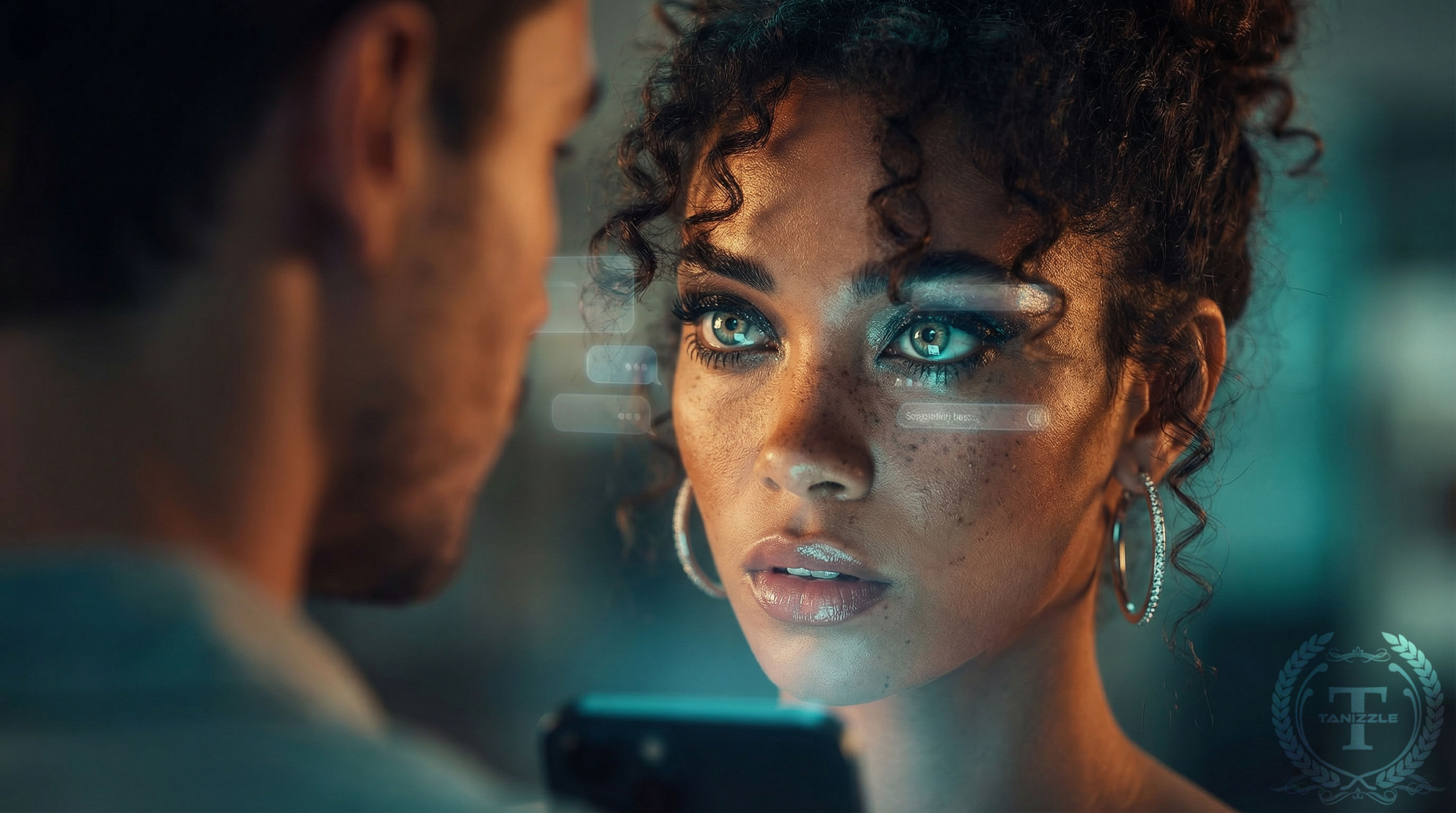
AI is becoming the wingman, therapist and referee in modern love-so are we fixing connection, or automating it until nobody grows anymore.
Signal Lost 2: When Love Gets Autocorrected
Part 1 ("Signal Lost") was our honest admission that men and women often feel like they're speaking different languages. Different expectations, different emotional wiring, different ways of interpreting the same sentence. We ended with a cliffhanger that sounded almost hopeful: maybe AI could translate what humans keep failing to say without turning it into a war.
Part 2 is where we flip the table.
Because what we're watching right now isn't "AI helping love." It's love getting automated. Instead of learning the language, we're hiring a translator. Instead of building the skill, we're buying the shortcut. And once you get used to a relationship where conflict is softened, personality is polished, and feelings are packaged into the "perfect message", real intimacy starts to feel like bad UX.
The Cyrano Effect: When Your AI Writes Your Personality
We're in the era where your opening line might be generated, your apology might be drafted, and your "funny flirty vibe" might be a settings toggle. A Singles in America study cited in coverage found 41% of singles would use AI for conversation starters and 40% would use it to craft the "perfect" dating profile. And it's not theoretical anymore-recent reporting says just over a quarter of singles are already using AI to enhance their dating lives, and that use jumped sharply year-on-year.
So here's the cultural glitch: if your charm is machine-polished and their reply is also machine-polished, are you two dating, or are the data centres flirting through you?
And don't get it twisted-this isn't "AI bad." AI can help awkward people communicate. AI can help socially anxious people get out of their own way. The issue is what happens when the real you never shows up because the synthetic version performs better. You don't learn confidence; you rent it. You don't learn empathy; you outsource it. You don't become more honest; you become more optimised.
Weaponised Therapy Speak: The Smart Way To Misunderstand
We've also invented a new form of emotional laziness: professional-sounding language that avoids vulnerability. Instead of "I'm hurt," it becomes "you violated my boundary." Instead of "you embarrassed me," it becomes "you're gaslighting me." Instead of "I'm scared you'll leave," it becomes a diagnosis, a label, a verdict.
Therapy language can be a gift when it's used correctly. But "therapy speak" also gets misused-psychologists have been blunt about how common terms are often applied incorrectly, and how that can confuse communication instead of improving it.
The Tanizzle take is simple: we've started using HR language in the bedroom. It makes people feel superior and "right," but it can make connection impossible. You don't build intimacy by winning the argument with vocabulary. You build it by risking honesty when it's uncomfortable.
The Referee Era: Upload The Argument, Get A Verdict
Now add AI to the mix and you get something even sharper: relationships with a third participant. Not a friend. Not a therapist. A machine referee.
People are already using AI tools and apps to help draft messages, decode conversations, and figure out what to say next. One of the clean examples is Rizz, an AI assistant that suggests responses and even analyses screenshots of conversations. It exists because the modern dating experience has become so exhausting that people started sending screenshots to friends for help-and some decided the "friend" could be an algorithm.
On paper, this looks useful. Sometimes it is. But there's a hidden trade: when you ask AI "who's right?" you're not just seeking clarity-you're replacing the practice of empathy with a verdict. If you need a robot to tell you why your partner is crying, you haven't solved misunderstanding. You've outsourced your humanity.
Validation On Tap: Why AI Feels Better Than Humans
Here's the truth nobody wants to say out loud: AI feels good because it doesn't push back. It validates. It responds on time. It doesn't have a bad day. It doesn't misunderstand your tone. It doesn't make you feel rejected when you were trying to be loved.
Real people do.
Humans are friction. Humans misread you, disappoint you, challenge you, trigger you, and sometimes fail you. But that friction is also where growth happens. A relationship that never tests you is a relationship that never develops you. It's a mirror that flatters you until you forget what reality looks like.
So yes, a synthetic lover can feel safer. But safety without friction becomes stagnation. You don't become more emotionally skilled. You become more emotionally managed.
The Checkmate: When People Quit Humans Entirely
This is where the conversation stops being funny and starts being cultural.
An IFS/YouGov survey found 25% of young adults think AI could potentially replace real-life romantic relationships, with a meaningful minority open to the idea of an AI partner.
That doesn't mean people are "doomed." It means people are tired. Tired of dating apps. Tired of miscommunication. Tired of emotional risk. AI companionship is the logical next product in a world that treats connection like a service.
And the danger isn't that everyone marries a chatbot tomorrow. The danger is softer: we normalise relationships where nothing is required from us except consumption. No patience. No repair. No learning. No growth. Just vibes, generated on demand.
Don't Ban The Tool-Stop Handing It The Steering Wheel
We're pro-tech. We'll say it with our chest. AI can help you communicate more clearly. It can help you find words when you're overwhelmed. It can help you slow down and respond instead of react.
But it should never become your personality, your conscience, your intimacy, and your empathy.
Use AI like training wheels, not like an autopilot. Let it help you find your words-but make sure the words are still yours. Let it calm the moment-but don't let it replace the hard work of repair. Because the whole point of love isn't perfect messaging. It's becoming a person who can handle imperfect reality with another imperfect person.
Tanizzle Says: If An Algorithm Has To Translate Your Heart, You're Not Dating-You're Delegating
The synthetic lover era isn't coming. It's already here, quietly, inside drafts and rewrites and "say it nicer" prompts. That doesn't make you a villain. It makes you human in a system designed to make human connection feel inconvenient.
But if we automate the hard parts of love, we don't get better relationships. We get smoother conversations and weaker bonds.
And we're not building an internet where people become more emotionally intelligent. We're building one where they become more emotionally assisted.
From Tanizzle: For You
If you want the Part 1 foundation this builds on, start with "Signal Lost" - why men and women keep missing each other even when they're trying.
And if you want the bigger picture, this isn't just about dating. It's the same question we've been asking across the tech era: when AI gets good enough, do we outsource the hard human work instead of building the skill ourselves? That's the uncomfortable thread here: will AI replace human jobs?
Tanizzle FAQs: Synthetic Intimacy And AI Dating
What is "synthetic intimacy" in simple terms?
Synthetic intimacy is a form of connection where emotional support or romantic interaction is mediated or generated by technology rather than built through direct human vulnerability and shared experience.
Is using AI to write dating messages dishonest?
Using AI for wording support is not automatically dishonest, but it can become deceptive if the messages present a personality, humour, or emotional depth that the sender cannot actually sustain in real life.
Can AI improve communication in relationships?
AI can improve communication by helping people organise thoughts and reduce reactive language, but it cannot replace empathy, accountability, and the willingness to repair conflict.
What is "therapy speak" and why does it backfire?
Therapy speak is the misuse of psychological terminology in everyday conversation, and it backfires because it can replace vulnerability with labels, turning conflict into power plays instead of understanding.
Are AI dating assistants making people less emotionally skilled?
They can, if people rely on them to avoid learning communication skills, because repeated outsourcing reduces practice in empathy, honesty, and conflict repair.
Could AI companions replace human relationships?
Some people believe they could, but even if AI companionship grows, it is likely to change relationship expectations more broadly by normalising lower-friction, validation-first connection.
How do you use AI without outsourcing your personality?
Use AI to clarify your intent, not to invent your voice, and treat it as a drafting tool that supports your communication rather than a substitute for honesty and emotional responsibility.