
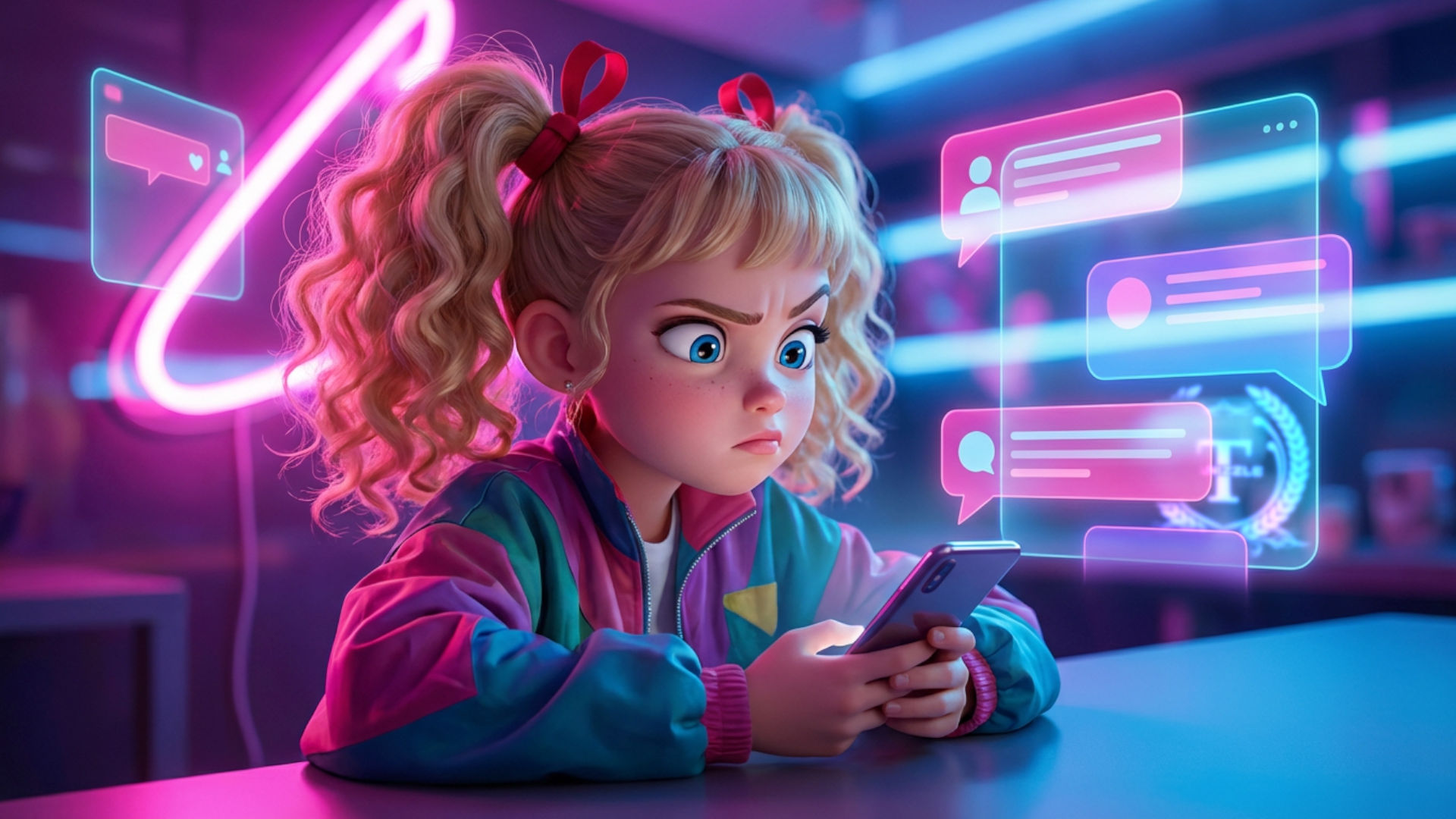
The UK is floating an under-16 social media ban but blunt restrictions can backfire unless platforms are forced to change addictive design and prove real accountability.
You Can't Ban Kids Out Of A Broken Feed
The UK is talking like the internet is a small room you can tidy up with one new rule. It isn't. It's an ecosystem with backdoors, workarounds, incentives, and entire shadow spaces that don't care what Parliament intended.
So when we hear "ban under-16s from social media," we get why it lands. Parents are tired. Schools are tired. Even teens are tired. But if the plan is a blanket ban as the headline solution, it's a political comfort blanket - and the internet will route around it.
Tanizzle's stance is simple: we're pro-tech, not naïve. We want kids safer online. We just don't want the UK to speed-run into vague, broad, power-trippy regulation that looks tough, sounds clean, and quietly makes the worst parts of the internet more attractive.
What The UK Is Actually Doing Right Now
This isn't just vibes and newspaper chatter. The government launched a consultation focused on children's relationship with mobile phones and social media, and it explicitly includes the option of banning social media for under-16s. It also floats raising the "digital age of consent," creating phone curfews, and restricting addictive design features like streaks and infinite scrolling.
Separately, pressure is already building inside Parliament. The House of Lords has backed an amendment tied to the Children's Wellbeing and Schools Bill that would push platforms toward age checks to block under-16s - a move that now puts the fight into the Commons.
So the wave is real. The question is whether the UK wants a serious fix, or a tidy headline.
Why A Ban Sounds Like A Win
A ban is emotionally satisfying because it feels decisive. It makes adults feel like they've "done something" without asking them to wrestle with the deeper truth: most of the harm isn't caused by teens existing online, it's caused by platforms being engineered for compulsion and scale.
It also helps that "ban" is simple to communicate. "We raised the age to 16" fits in a tweet, a soundbite, and a manifesto. "We forced platform design changes, independent audits, and measurable outcomes" is the kind of work that gets less applause and more complaints.
And let's be real: the UK is in a moment where government wants to look like it's taking control of the online world - AI, social media, everything - and the temptation is to swing big even when the details are still blurry.
The Backfire Problem Nobody Wants To Own
Here's the part politicians quietly admit when they're being honest: pushing kids off mainstream platforms doesn't delete demand. It reroutes demand.
That can mean teens ending up on smaller, messier services with weaker moderation, more predators, more scams, and less visibility for parents. Even Starmer has raised the concern that blunt measures could drive children toward riskier corners of the internet.
And yes, this also includes the awkward reality that "ban" doesn't magically stop access. It changes the default path. Kids will still find ways in through older accounts, borrowed devices, fake birthdays, private group chats, and whatever the next workaround culture decides is cool.
If we don't fix incentives and design, we're basically squeezing a balloon and congratulating ourselves when the bulge moves out of sight.
Age Checks Aren't Free, And The UK Already Knows This
To enforce any serious age threshold, you end up in age assurance territory. The UK is already moving hard in that direction through the Online Safety Act and Ofcom's work, including guidance and expectations around "highly effective age assurance" and age checks in specific high-risk areas.
That matters, because it means the UK isn't starting from zero - but it also means we're walking into a predictable trade-off: the more we age-gate the mainstream internet, the more we create incentives to centralise identity checks, collect sensitive data, and normalise "show your papers" online.
Privacy groups are already warning that blanket bans can expand age-gating for millions, with real risks to privacy and freedom of expression - including the silencing of young people who use platforms for support and community.
So if the UK goes down the ban route, the age-check implementation can't be treated as an afterthought. If we get that part wrong, we'll solve one problem by creating another.
The Real Target Is Design, Not Existence
What the UK is starting to say - and what we want it to say louder - is that the addictive features are the issue.
Because banning under-16s while leaving the machine intact is like banning kids from a casino while keeping the slot machines in every living room. It misses the point. The consultation explicitly raises curfews and restrictions on addictive mechanics like streaks and infinite scroll for a reason.
If the goal is children's wellbeing, then the measurable wins are things like: less compulsion, less algorithmic tunnel-vision, fewer dark patterns, stronger defaults, and clearer accountability when platforms fail.
That's where regulation becomes serious. Not when it announces an age number, but when it forces the product to change.
A Tanizzle Standard For "Good Regulation" In This Space
We don't want "ban theatre." We want rules that bite the people who profit from the harm, not rules that mainly punish normal families with extra friction.
Good regulation here has a few non-negotiables. It has to be specific enough that platforms can't wriggle out with PR and policy PDFs. It has to target design and incentives, not just access. It has to demand proof - not promises. And it has to avoid vague scopes that can be stretched into "we can regulate anything online if we feel like it."
The UK has already lived through the chaos of trying to regulate broad, subjective harm categories - the "legal but harmful" era showed how quickly unclear definitions turn into free-speech panic, over-removal incentives, and regulatory confusion. The government later moved away from that approach.
So let's not repeat that mistake with a new shiny panic.
What We'd Support, And What We'd Reject
We'd support hard, enforceable platform duties that change default experiences for minors, strip out compulsion features, and force transparency. We'd support age assurance where it's necessary, provided it is privacy-respecting, proportionate, and doesn't become a quiet excuse for mass identity surveillance.
We'd reject any approach that treats "ban under-16s" as the whole solution, because it's not. We'd also reject vague frameworks that let government expand control over lawful speech because someone decided it felt "harmful" this week.
And if politicians want a real win, here's the most honest version of the pitch: the point isn't to keep kids off the internet. The point is to make the internet stop behaving like it's designed to farm kids.
Tanizzle Says: If You Don't Change The Machine, Kids Just Find A New Door
A ban makes adults feel in control. The internet doesn't care. If you don't target design, incentives, and enforcement, you're not solving the problem - you're just moving it somewhere you can't see it. On that note, it's really time to #FixTheFeed.
From Tanizzle: For You
If you want the bigger pattern behind this - how bad online behaviour gets used as fuel for rushed, heavy-handed lawmaking - our piece on AI misuse and regulation is the cleanest foundation.
If you want the psychological angle behind why "just stop scrolling" is a fake solution, our breakdown of dopamine fixes explains the hook the platforms are built on.
If you want the lived-experience side of why social platforms feel exhausting even when you're not "addicted," our piece on draining social media connects the human cost to the design.
Tanizzle FAQs: The UK Under-16 Social Media Ban Debate
What is the UK proposing for under-16s and social media?
The UK government has launched a consultation that includes the option of banning social media for under-16s, alongside other measures such as raising the digital age of consent, creating phone curfews, and restricting addictive design features like streaks and infinite scrolling.
Has Parliament already voted on an under-16 social media ban?
The House of Lords has backed an amendment connected to the Children's Wellbeing and Schools Bill that would require age checks to block under-16s, but it would still need to survive the House of Commons process to become law.
What is the "digital age of consent" and why does it matter here?
In this context, raising the digital age of consent is being discussed as a way to limit companies' ability to use children's data without appropriate consent, and it is one of the options the government says it will examine in the consultation.
Would a ban stop teens accessing social media completely?
It would likely reduce access through mainstream routes, but it would not eliminate demand, and policymakers have acknowledged the risk of unintended consequences such as pushing young people toward riskier online spaces.
How does the Online Safety Act connect to this debate?
The Online Safety Act already sets a framework for protecting children online and Ofcom has been implementing codes and guidance, including expectations around effective age assurance and age checks in certain high-risk contexts.
What would Tanizzle support instead of a simple ban?
Tanizzle would support enforceable rules that force platform design changes, demand measurable safety outcomes, and use privacy-respecting age assurance where necessary, rather than relying on a headline ban as the primary solution.