
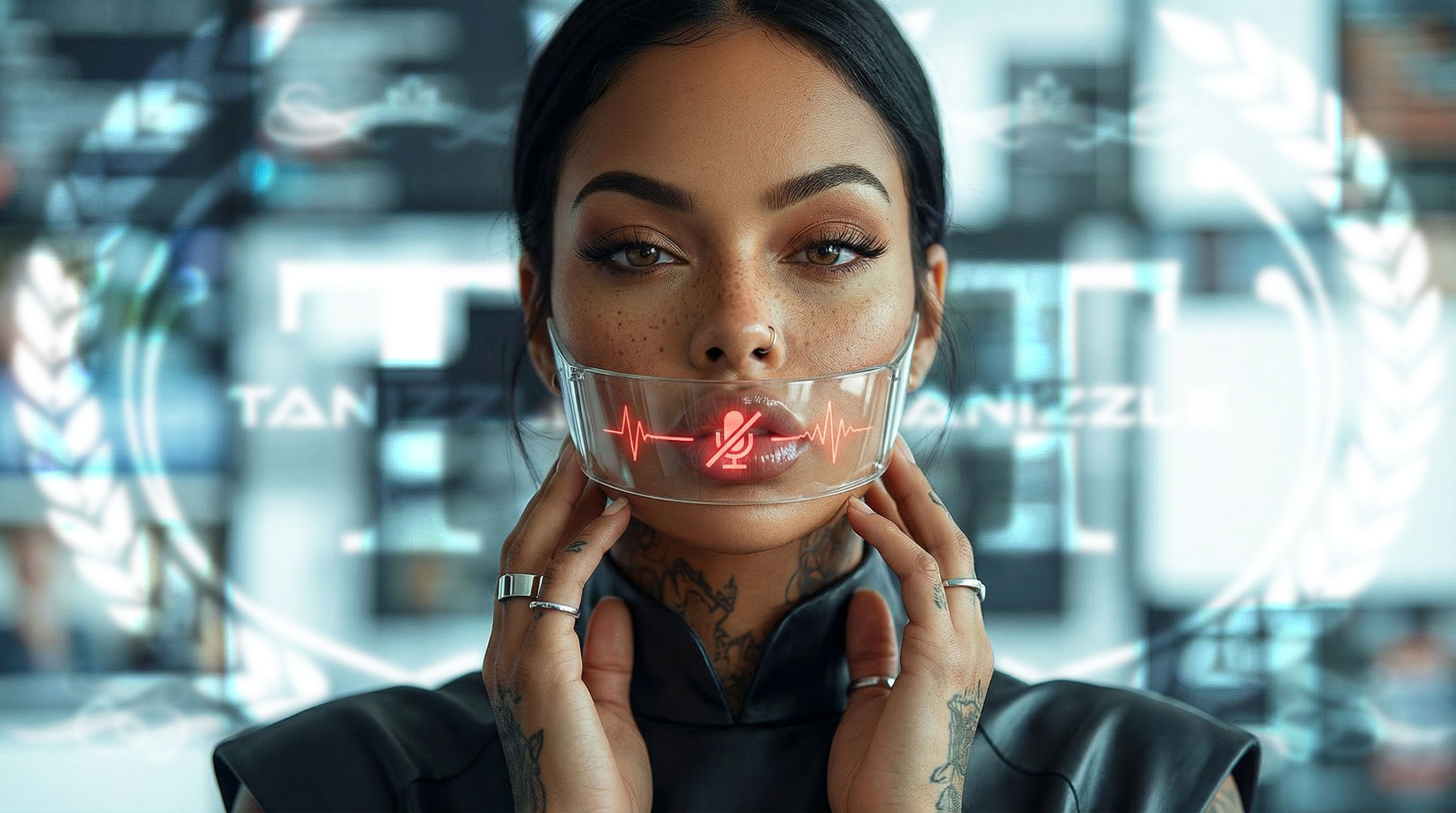
Governments are responding to AI misuse with broad regulation that risks punishing creativity and innovation instead of targeting the bad actors causing real harm.
The Line Isn't "No AI" - It's Consent, Context, And Control
Artificial intelligence isn't being regulated because it's inherently dangerous. It's being regulated because it's being misused - and governments are responding with speed rather than precision. From deepfakes and impersonation to synthetic scams and viral outrage, the loudest abuses of AI are now shaping rules that will affect everyone, including creators who were never the problem in the first place.
This isn't a debate about whether harm exists. It does. The real question is whether fear-driven regulation can tell the difference between exploitation and expression, and what happens to culture when it can't. Because when policy is written broadly enough to "cover everything," it rarely lands where it should. It lands where it's easiest.
Misuse Is Real, But It's Not The Whole Story
Let's draw the line clearly before anything else. Non-consensual deepfakes, impersonation, harassment, synthetic fraud, and exploitative content are real harms. They deserve serious attention and decisive enforcement. Tanizzle does not defend that behaviour, and never will. Consent is non-negotiable, and harm is not something to be reframed as creativity.
But collapsing the entire technology into its worst use cases is where the conversation breaks down. When the most extreme examples dominate public discourse, nuance disappears. Once nuance is gone, regulation stops being targeted and becomes ideological. Instead of addressing specific behaviour, it begins to treat tools themselves as suspicious by default.
That's how a problem that requires precision gets handed a blunt instrument.
When Regulation Stops Aiming And Starts Swinging
The danger isn't regulation itself. Some form of governance is inevitable when new tools scale faster than social norms can adapt. The danger lies in how regulation is framed. Vague terms like harmful, unsafe, or misleading sound reasonable, but when left undefined, they become flexible levers of control. What starts as protection quietly becomes suppression.
Ambiguity creates power. Platforms respond by overcorrecting, moderation systems default to caution, and creators are left guessing where the invisible line sits. When the cost of being misunderstood is high, most people don't push boundaries - they retreat. Not because they're wrong, but because they can't afford the risk.
The Quiet Cost To Creators And Culture
The people abusing AI (including AI slop) aren't building culture. They're exploiting attention. Yet the people most affected by broad regulation are rarely those abusers. They're artists, filmmakers, designers, writers, and independent creators experimenting responsibly at the edges of new tools.
When rules become unclear, platforms play it safe. When platforms play it safe, content becomes flatter, safer, and more corporate. Not because it's better, but because it's less likely to trigger liability. That shift doesn't just change what gets published - it changes what gets imagined in the first place.
Culture doesn't evolve under fear. It evolves through experimentation, provocation, and the freedom to explore ideas without being treated as suspicious by default.
This Isn't About Defending Bad Actors
There's a familiar move that always appears when these conversations heat up. If you question the scope of regulation, you're accused of defending misuse. If you argue for creative freedom, you're framed as reckless. It's a lazy framing, and it shuts down the nuance that good governance actually requires.
You can oppose abuse and oppose overreach at the same time. You can protect people without flattening creativity. Tanizzle's position is simple: accountability should be targeted, not ideological. Enforcement should focus on actions that cause real harm, not on the existence of tools that can be used responsibly or irresponsibly depending on context.
Why AI Became The Perfect Scapegoat
AI didn't invent misinformation, scams, harassment, or exploitation. It accelerated them. That distinction matters because it tells the truth about what needs fixing. Blaming the tool is politically convenient because it avoids addressing deeper structural failures: weak enforcement, perverse platform incentives, and attention economies that reward volume over quality.
Moral panic cycles are nothing new. A new medium emerges, people experiment, some misuse it, headlines explode, and regulation follows - often in a form that overshoots. Years later, society realises it overcorrected, but by then the cultural narrowing is already baked in.
AI is simply the latest target in a very old pattern.
The Line Tanizzle Draws
Tanizzle does not sit on the fence. Non-consensual content is unacceptable. Exploitation, impersonation, fraud, and harassment are not creative genres. Anything involving children is an absolute red line with no grey area. Consent matters. Context matters. Control matters.
At the same time, we reject the idea that moral panic should dictate the future of creativity. Fiction is not deception. Art is not harm. Provocation is not violence. Technology should not be treated as guilty because it makes some people uncomfortable, and creators should not be punished because bad actors are loud.
The line should be clear, enforceable, and fair - not vague, emotional, and politically convenient.
What Smart Governance Actually Looks Like
Good governance focuses on use, not existence. It enforces consent. It punishes impersonation and fraud. It protects private individuals without criminalising fiction, satire, or clearly signposted synthetic media. Most importantly, it provides clarity, because clarity is what allows creativity and safety to coexist.
When rules are precise, creators know where they stand. When rules are vague, fear fills the gaps. That's how "safety" frameworks become quiet cultural muzzles - not because anyone planned it that way, but because ambiguity always favours restriction.
Why This Moment Matters
AI is no longer a novelty. It's infrastructure. The decisions being made now won't just shape policy; they'll shape culture for years to come. Whether the future internet is expressive or sterile depends on whether regulation is built on understanding or panic.
Tanizzle isn't here to defend bad behaviour or inflame outrage. We're here to draw the line clearly, intelligently, and without surrendering the future of creativity to the loudest mistakes.
From Tanizzle: For You
If you're noticing platforms quietly reshaping content to minimise risk, that shift is closely tied to the rise of zero-click answers and algorithmic gatekeeping, which affects who gets seen, who gets paid, and who gets quietly buried.
The wider collapse in trust online also feeds into this moment, especially as AI slop floods feeds and makes regulators feel justified in swinging wide instead of aiming carefully.
And behind all of it sits a deeper structural question we've already explored - what AI search actually is, and whether it's healthy for publishers trying to survive in the new attention economy.
Tanizzle FAQs: AI Deepfakes and Regulations
Is AI regulation inevitable?
Some regulation is inevitable, especially around consent, fraud, and exploitation. The issue isn't whether rules exist, but whether they are precise enough to stop harm without flattening creativity.
Are deepfakes always illegal or unethical?
No. Context matters. Non-consensual impersonation and deception are unethical, but clearly fictional or artistic synthetic content isn't inherently harmful.
Why are creators worried about AI regulation?
Because vague rules encourage platform over-moderation, which limits experimentation and expression even when creators are acting responsibly.
Can regulation protect people without killing creativity?
Yes, but only if it targets behaviour and intent rather than treating tools as guilty by default, and only if the boundaries are clearly defined.
Where does Tanizzle stand on AI and creativity?
We're pro-technology, pro-consent, and pro-creative freedom - without defending exploitation, impersonation, or abuse. But the Digital Regulations Agenda is very real.