

Decode why social media (the internet) feels so draining and how to beat social media fatigue without deleting every app from your life.
Why Social Media Feels Like It's Quietly Draining Your Brain
You know that feeling when you finally lock your smartphone, stare at the ceiling for a second and think, "Why am I this tired? I've literally been chilling here doing nada." You didn't run a marathon. You didn't spend the day swerving simps in the streets. You barely left the bed. All you did was "catch up" on your feeds. TikTok. Instagram. X. Maybe a little YouTube for dessert. A casual rotation of wars, memes, glow-ups, breakups, brand launches, therapy talk, tragedies, couple goals, gym progress and that one content creator who swears this year is finally their year.
And somehow your body feels like it just finished a twelve-hour shift in a call centre that doesn't believe in breaks.
We laugh it off. We call it brain rot. Doomscrolling. Attention span cooked. "My phone has fried my head." But behind all the memes is a very real pattern: people are closing apps more drained than when they opened them. That isn't just "spending too much time on your phone." There is a specific kind of fatigue that comes from being plugged into feeds that never end, never rest, and never shut up.
Tanizzle 4-Thought time. Let's talk about why your brain is exhausted from "doing nothing."
The New Language Of Being Done: Brain Rot, Doomscrolling And Rage Bait
The internet had to invent its own dictionary just to describe how finished we feel. "Brain Rot" started as a throwaway insult for low-value, mind-melting content. It went so mainstream it landed in word-of-the-year conversations. People use it to capture that fuzzy, mushy state after bingeing short-form videos, trivial dramas and pointless gossip - like what we used to entertain - until you can't even remember what you watched. You just know your brain feels clogged and slightly melted.
Then there's doomscrolling. That's the moment you open a news thread "just to see what's going on" and end up sinking through an endless layer cake of disasters, political chaos, climate dread, crisis footage and emotional confessionals. You tell yourself you're staying informed. In reality you're being dragged through a rolling apocalypse highlight reel that never gives you any kind of resolution. Your survival brain is trying to make sense of global crisis content inside the same interface that serves you dog videos and dance trends.
And because the universe loves chaos, now we have rage bait. Entire pieces of content are engineered specifically to make you angry, offended or disgusted because those emotions drive comments and shares. It doesn't really matter whether the clip is staged or edited out of context. The goal is simple: spike your heart rate and keep you arguing.
On paper, these words look like slang. In practice they are labels for the same phenomenon: a nervous system that is constantly being yanked between trivial nonsense, real crises, fake outrage and curated perfection, with no buffer and no rest. Of course you feel drained. Of course you close the app feeling heavier. The question isn't "why are you so sensitive?" The more honest question is: how is your brain still functioning after being dragged through that emotional blender every day?
Social Media Fatigue: You're Not Just "On Your Phone Too Much"
There is an actual term now for the burnout you feel from your feeds: social media fatigue. It's not just "I'm bored of this app." It's not "I should really use my phone less" said in that fake guilty way. Fatigue is that mix of emotional emptiness, mental clutter and physical tiredness that hits after a session of supposed relaxation.
You've felt it. You open an app to unwind for five minutes and your body feels weirdly tense twenty minutes later. Your mind feels full, but nothing specific sticks. You switch from TikTok to Instagram to X to YouTube, chasing a feeling that never lands. You feel like you've talked to a hundred people and yet you haven't spoken to anyone. You are tired of people, tired of opinions, tired of noise - and you still can't quite bring yourself to put the phone down.
Underneath that, your brain is doing too many jobs at once. It is trying to process information overload as you swipe past more content in half an hour than previous generations saw in a week. It is constantly measuring you against other people's lives, bodies, homes, relationships and careers in real time, because those "just for fun" posts still hit your self-esteem. It is trapped in a weird compulsion loop, checking for notifications, views and replies even when you don't consciously care. It is holding a quiet fear of missing out in the background, because if you log off you might miss some news, an opportunity, a trend, an in-joke or even a crisis.
In our article on Content Creators Are Fed Up - But Why Don't They Quit?, we talked about the exhaustion of performing for the algorithm. Social media fatigue is the audience side of that story. You're not just consuming content. You are trying to keep up with an entire parallel universe, and your brain was not built to live in two realities at once.
Doomscrolling: "Staying Informed" As A Full-Time Job
There is a difference between checking the news and doomscrolling, and your nervous system knows it even if you don't have language for it.
Checking the news is simple. You open a trusted source, you see what happened today, you get enough context to understand the basics, and you step away. Doomscrolling is something else. It is a loop. You fall into a thread, a recommendation rabbit hole, a chain of reshared clips and stitched reactions. Every time you think you have the story, another angle appears. Another video. Another "you're not seeing the real problem" post. Another comment thread full of conflict, fear and hot takes.
Social media turns news into content. It squeezes war, climate crisis, political breakdown, public tragedy and personal trauma into the same vertical format as recipes and outfit videos. Your survival brain is trying to process existential information in a space that is optimised for entertainment. That conflict exhausts you.
You tell yourself you're just trying to "understand what's going on," but the feed was never designed to give you closure. It was designed to give you something else to watch. There is no moment where the app says, "Okay, you've seen enough, this chapter is done." Your nervous system never gets the signal that the threat has been handled. It just stays activated, primed, on edge, and then you wonder why you feel blank and twitchy afterwards.
If you've read Why Does Your Brain Love Dopamine Fixes So Much?, you already know how your brain gets hooked on "maybe the next one will make this feel better." Doomscrolling hijacks that wiring. The next post never calms you down. It just gives you a new reason to keep going. That drained, heavy feeling you carry afterwards isn't you being dramatic. It is the hangover from being in crisis mode for an hour without ever doing anything about the crisis.
Brain Rot And The Slow Erosion Of Your Attention
People joke that TikTok destroyed their attention span. It sounds dramatic until you notice how many things suddenly feel "too long." Films feel longer. Conversations feel slower. Articles feel like assignments. Waiting in a queue without your phone feels like punishment. Silence feels like an error code.
"Brain rot" is the internet's way of describing what happens when your mind is overstimulated on junk content for long enough that your focus collapses. The system gets used to a very specific rhythm: fast cuts, bold subtitles, sound effects, music, edits, jump zooms, thirst traps, jokes, reactions, plot twists and emotional whiplash - all compressed into seconds. Your brain adapts to that level of constant novelty.
Then normal life shows up, unedited. Your co-worker is explaining something in real time and you can't double-tap to skip their intro. Your friend is telling a story and you can't swipe them away. Your work task requires ten uninterrupted minutes and there is no trending audio under it. Of course your brain is bored. It has been trained to expect fireworks, and now it's being asked to watch a candle.
We already broke down the dopamine side of this in Why Does Your Brain Love Dopamine Fixes So Much?. Short bursts of novelty teach your brain to chase immediate reward instead of deep engagement. Add the brain rot effect on top, and you're left with three things happening at once. You have cognitive overload from tiny fragments of information that never settle into a coherent picture. You have emotional desensitisation because everything is intense or trivial and nothing sits in the middle. And your capacity to sit with one thing for longer than a few seconds slowly erodes.
You don't walk away from that feeling satisfied. You walk away feeling cloudy and weirdly empty, like you just ate an entire party-sized bag of crisps: technically full, nutritionally bankrupt. Is this you?
The Emotional Economy: FoMO, Comparison And Quiet Grief
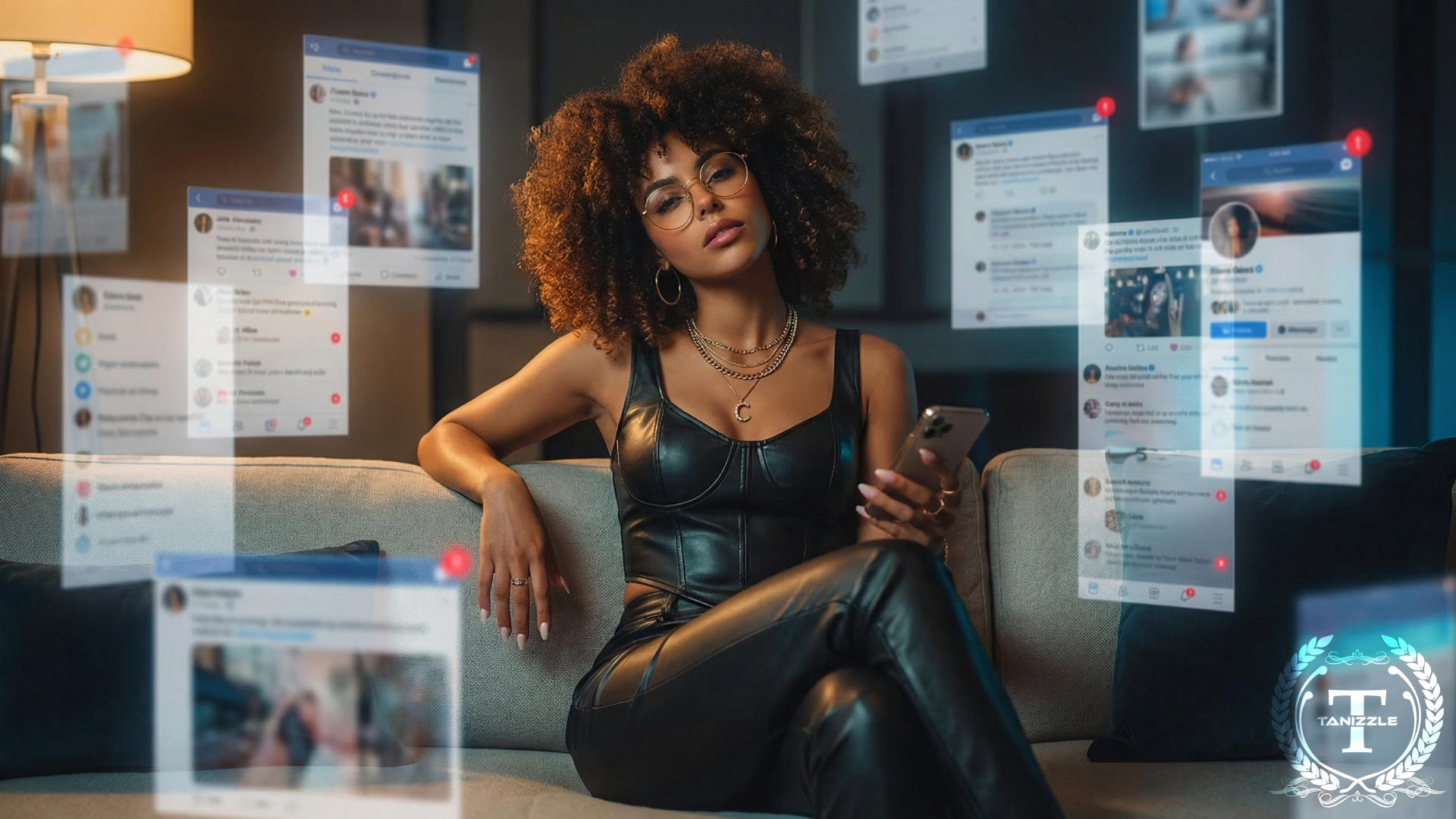
The timeline doesn't just play with your attention. It plays with your feelings in a hundred tiny ways that add up.
There is the fear of missing out that hums in the background of your day. If you don't open the app, you might miss the joke everyone is repeating tomorrow. You might miss the news that everyone suddenly cares about. You might miss an opportunity, a DM, a job posting, a trend that could help your brand, a community moment. You know, logically, that you can't see everything. Emotionally, the thought of being "late" to the conversation feels like a threat.
There is comparison. Not the old-school "my neighbour's car is nicer than mine" kind. This is comparison at scale. Hundreds of people your age, or younger, or older, all parading their best angles and highlight moments. Career updates. Engagement announcements. New apartments. Collabs. Body transformations. "What I eat in a day." "Soft life." "That girl" routines and her clothing try-on hauls. You aren't comparing yourself to one person you know anymore. You're comparing yourself to an entire catalogue of optimised lives - digital personas.
There is performative emotion. Tears on camera. Therapy recaps. Trauma stories with ring lights. Strangers' worst moments edited into mini-movies. You absorb deeply personal content from people you do not know and will never meet. You are emotionally activating over things you cannot change, then immediately being asked to laugh at a meme two swipes later. That kind of emotional whiplash takes a toll.
And beneath all of it is a quiet grief we don't talk about often. Grief for the time you have lost to feeds that didn't leave you feeling any better. Grief for the version of you that you thought would exist by now, the one you measure against everyone else's achievements. Grief for the way your relationships shifted from physical spaces to comment sections.
In Why People Don't Feel Like Themselves Anymore, we talked about identity fragmentation: the way different platforms push you into slightly different roles. The polished version here. The chaotic version there. The professional version somewhere else. When you are performing all of those roles at once, on top of dealing with FoMO, comparison and emotional overload, exhaustion isn't surprising. It's inevitable.
If It's So Draining, Why Don't We Just Log Off?
If social media is this exhausting, the obvious question is why everyone is still here. If the apps drain us, why don't we just delete them and go live in a cottage with terrible Wi-Fi and a vegetable garden?
Because at this point, social media isn't just an entertainment app on your home screen. It has quietly become infrastructure.
Your family updates are here. Birthdays. Baby photos. Illness news. Big announcements. Your friendships live here. Group chats, memes, voice notes, private story circles. Your career touches here too. Work opportunities, networking, industry gossip, portfolio clips, brand visibility, side-hustle promotion, even full-time income for creators.
Leaving doesn't just mean missing memes. For a lot of people it means losing reach, losing clients, losing community, losing access to information, losing the easiest way to be seen. That's a big price to pay for "less fatigue," especially when your entire social circle is staying put.
On top of that, the platforms are built to keep you. Habit loops are baked into the design. Likes, shares, streaks, notifications, suggestion carousels, autoplay, infinite scroll - every design decision makes staying a few seconds easier than leaving. Multiply that by a thousand micro-decisions per day and you understand why "just log off" sounds simple and feels impossible.
We said in the creator burnout article that creators don't just leave because their identity and money are wired into the same machine. Regular users are in a softer version of the same trap. Your social connection, identity, entertainment and information stream have all been centralised into a handful of apps. Of course you don't just walk away.
So no, the answer is not "you're weak, just get off your phone." You're entangled. But that doesn't mean you're powerless. The real shift is moving from default user to intentional user. The apps might be built to drain you. You don't have to give them direct debit access to your nervous system.
Tanizzle Says: You're Not Broken - The System Is Just Doing Too Much
If social media leaves you drained, you are not failing at modern life. Your nervous system is doing exactly what it was built to do: react to signals, track threats, measure status, scan for belonging and make sense of your environment. Platforms have simply turned all of that machinery up to eleven and left it running.
The apps are optimised for engagement, not for what you feel when you close them. High arousal emotions perform best. Anger performs. Outrage performs. Shock performs. Jealousy performs. Fear performs. Panic performs. A soft, nuanced, calm perspective is beautiful, but it doesn't spike the graph in the same way, so it gets buried. Your brain ends up on a diet of intense, compressed experiences instead of steady, grounded ones.
You are allowed to treat your attention like it's finite, because it is. You're allowed to curate the hell out of your feeds. Mute accounts that drain you, even if you "know" them. Block creators who live off rage bait. Unfollow aesthetics that make you resent your own life. Turn off notifications that drag you back into apps you weren't thinking about. You're allowed to say, "I don't want this much access to my nervous system given away for free."
Social media isn't going anywhere. Tech is not about to pack its bags and return to 2005 out of respect for your burnout. But you don't have to keep playing on default settings. You can choose shorter sessions. You can decide which platforms actually deserve your energy. You can replace some of your "brain rot slots" with content that actually nourishes you instead of just distracting you.
If you start closing your apps a little less drained, a little less numb, and a little more aware of what they're doing to you, 's already a win. You are not broken for feeling exhausted. The system is just doing too much. Your job is not to toughen up for a broken system. Your job is to protect your brain while you move through it.
Tanizzle FAQ: Why Does Social Media Feel So Draining?
Why does social media make me feel tired even when I'm just lying still?
Your body might be physically still, but your brain is not resting. While you scroll, your is processing huge amounts of visual and emotional information: jokes, arguments, bad news, good news, strangers' lives, your own notifications. That level of cognitive and emotional work burns energy. The tiredness you feel afterwards is the cost of your brain sprinting in place for half an hour.
What is social media fatigue, really?
Social media fatigue is the burnout that comes from being constantly plugged into updates, opinions and interactions. It feels like mental overload and emotional flatness at the time. You keep up with everything and feel connected to nothing. It's not just "too much screen time." It's the feeling that your brain can't handle one more take, one more notification or one more conversation thread, but the app keeps serving them anyway.
Is doomscrolling actually bad for my mental health, or is it just a meme word?
Doomscrolling is more than a joke. When you marinate in negative news, crisis clips and stressful commentary for long enough, your nervous system stays on high alert. That can feed ety, stress, fear and a sense that the world is permanently on fire. It can make sleep harder. It can make your own life feel smaller and more pointless than it actually is. Checking the news is normal; turning crisis-watching into a nightly hobby is where it starts to hurt.
Will deleting social media fix my drained feeling completely?
For some people, taking a full break or deleting certain apps is a game-changer. For others, especially if your work, community or creativity live online, quitting everything is unrealistic. Coming off social media can reduce noise aive your brain a reset, but it won't magically solve loneliness, low self-esteem or deeper problems by itself. Usually the biggest shift comes from changing how you use it: which accounts you follow, how long you stay, and what role it plays in your day.
How can I make my feeds feel less draining without disappearing from the internet?
Think of yourself as the editor-in-chief of your own media diet. You can decide which voices and aesthetics get a slot and which ones don't. Unfollow generously. Mute aggressively. Turn off non-essential notifications. Keep some apps off your home screen so you don't tap them on autopilot. Replace a portion of your endless scroll time with slower content that actually feeds you: long videos, meaningful articles, conversations, even silence. The goal isn't to become a digital monk. The goal is to stop treating your brain like a battery pack for everyone else's engagement.