
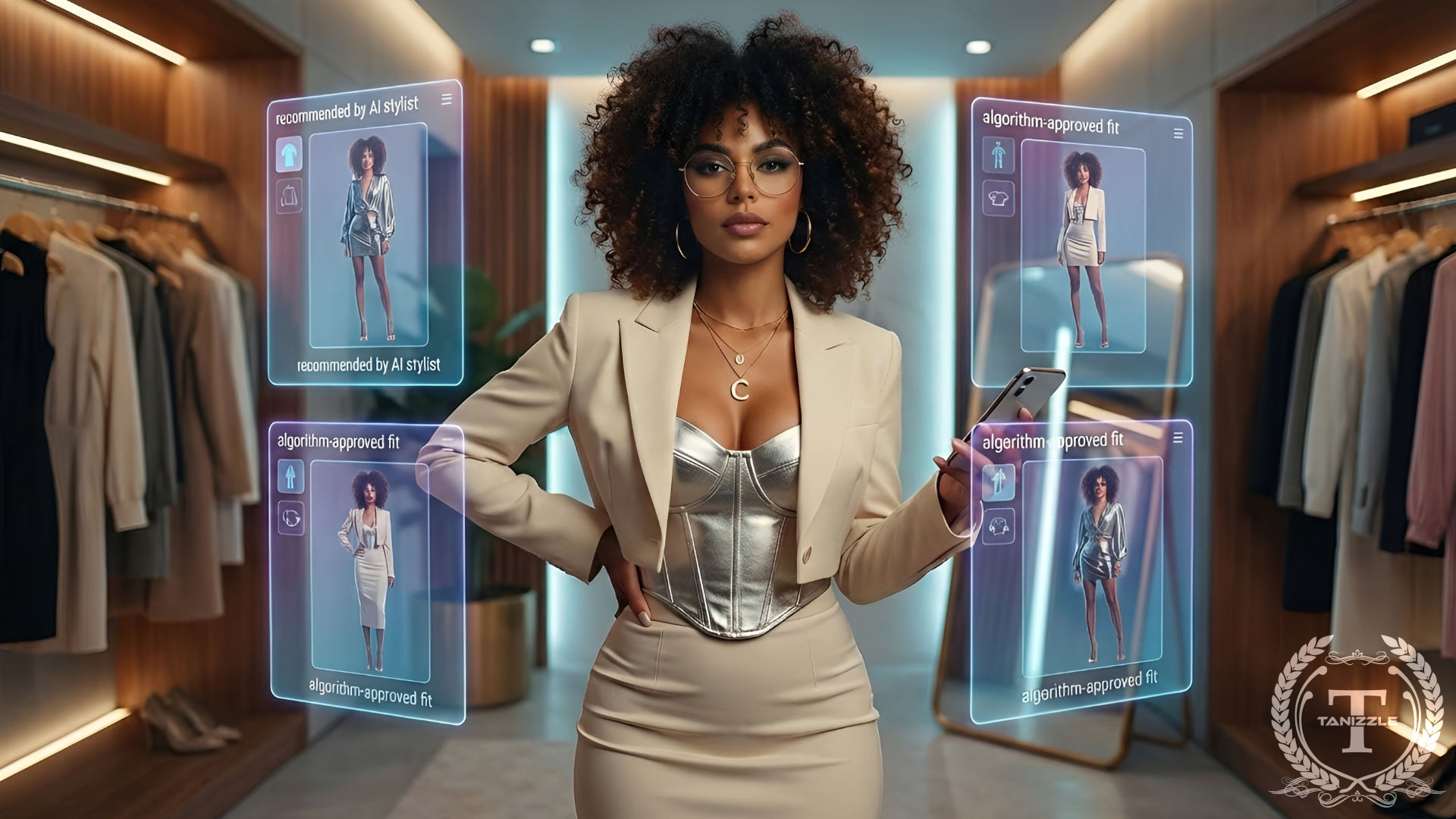
In 2025, getting dressed isn't just about what looks good in the mirror - it's about what performs on the feed. From Y3K metallics and blokecore jerseys to quiet luxury and coquette bows, your outfit has become data for algorithms (AI stylists).
You're Not Just Getting Dressed - You're Dressing Your Algorithm
There was a time when getting dressed started with questions like: "What's the weather saying?" or "Where am I going?" Now there's a quieter question sitting underneath all of that: "How is this going to look on my feed?"
You stand in front of the mirror, but the real test is your front camera - flexing. You're not just checking if the outfit fits. You're checking if it matches your grid, your TikTok energy, your Pinterest boards, your "aesthetic." You know which colours hit better on Reels. You know which silhouettes photograph well in 0.5. You already understand that your outfit isn't just fabric - it's content.
In 2025, fashion and interfaces have merged. Your clothes still have to function in reality, but they also have to perform inside a 9:16 frame. Your outfit used to be about the room you were walking into. Now it's just as much about the timeline you're about to appear on.
Your wardrobe has quietly become a user interface. And whether you like it or not, you're dressing for an audience that includes friends, strangers, algorithms, AI stylists and brands mining your drip for data.
We've already talked on Tanizzle about how tech messes with your sense of self in "Why People Don't Feel Like Themselves Anymore" and how your brain chases hits in "Why Does Your Brain Love Dopamine Fixes So Much?". This time we're applying that same energy to your wardrobe. Because your outfit has officially joined the data economy.
This is Tanizzle: 4-Style.
Core Culture: When Your Style Becomes A Search Term
Right now, if you ask a Gen Z or Gen Alpha what their style is, they're not going to say "I like fashion." They'll tell you their "core."
Y3K. Blokecore. Blokette. Quiet luxury. Coquette. NPC. Your style is no longer just taste - it's a tag, and a little hard to swallow.
Take Y3K. Short for "Year 3000," it's the futuristic cousin of Y2K: metallic finishes, chrome accessories, dystopian sci-fi silhouettes and alien-coded make-up. It looks like your wardrobe fell through a wormhole and landed in some alternate reality after the apocalypse. Fashion writers describe it as blending technology, styling and speculative futurism, with silver pants, metal bags and holographic sunglasses as the entry point.
Then there's blokecore and blokette. Blokecore takes football culture - vintage shirts, scarves, terrace jackets, Adidas Sambas - and drags it from stadium to street. Blokette flips that into something more playful and gender-fluid: oversized jerseys layered with mini skirts, ribbons, sheer socks and ballet flats. It's that clash between masculine nostalgia and feminine softness that has TikTok obsessed.
Quiet luxury - or "old money" - is still everywhere too: linen, neutrals, soft tailoring, gold jewellery, "I own a boat but I don't talk about it" energy. It's clean, inoffensive and extremely brand-safe. Coquette and bow-core refuse to die: pastel lace, ribbons, hair bows, ultra-feminine silhouettes. And on the opposite side, NPC fits: grey sweatpants, basic hoodies, deliberately boring athleisure that says, "I'm not the main character today."
On the surface, all of this is just fun. But notice what's happening underneath. These aesthetics aren't just outfits. They're effectively search terms you can wear. When someone dresses "Y3K," "blokette" or "quiet luxury," they're not just expressing themselves. They're making their body legible to algorithms, recommendation systems and other people scrolling.
You're not just choosing a look. You're choosing a category. You've become visually indexable.
That's not automatically bad. It can be freeing to find a label that matches your vibe. But it's worth asking: are you dressing old money because you genuinely love linen and loafers, or because you've absorbed the idea that looking rich performs better on the ‘gram?
Wearable Algorithms: Your Wardrobe As Data
Fashion has always responded to culture, but now it responds to code. Algorithms are already scanning millions of outfits to decide what's "in," and AI is whispering back styling suggestions tailored to your life.
AI-powered stylist apps now build wardrobes and daily outfits by analysing your photos, measurements, saved pieces and preferences. Some, like Style DNA and similar AI fashion assistants, promise five ready-to-wear outfit ideas a day based on your colouring, body type, lifestyle and budget. Others like Acloset and similar tools use AI-driven suggestion engines to recommend new clothing and combine what you already own into "optimised" looks.
That sounds harmless, even helpful - until you zoom out.
Every outfit you post, every look you save, every product you click becomes a training example. Your "bloke-meets-coquette" jersey and mini skirt? That's data. Your quiet luxury Sunday fit? Data. Your Y3K metallics with chunky cyber sunglasses? Data. AI models digest this and serve it up to brands, retailers and other users as "insight" into what people like you will want next.
Your wardrobe isn't just personal style. It's a feedback loop.
You wear something you saw online. You post it. The algorithm tracks how it performs. AI tools use that behaviour to make new recommendations. Brands design into those signals. Your feed fills up with upgraded versions of the same aesthetic. You choose from that menu next time you shop.
If you've read our piece "How AI Is Transforming The Fashion Industry With Wearable Tech," you already know that fashion brands are leaning into data-driven decisions: from predicting trends to designing garments that fit digital-first behaviour. This "wearable algorithms" era is just the consumer-facing side of that same story.
Phygital Drip: Clothes That Come With Their Own Filter
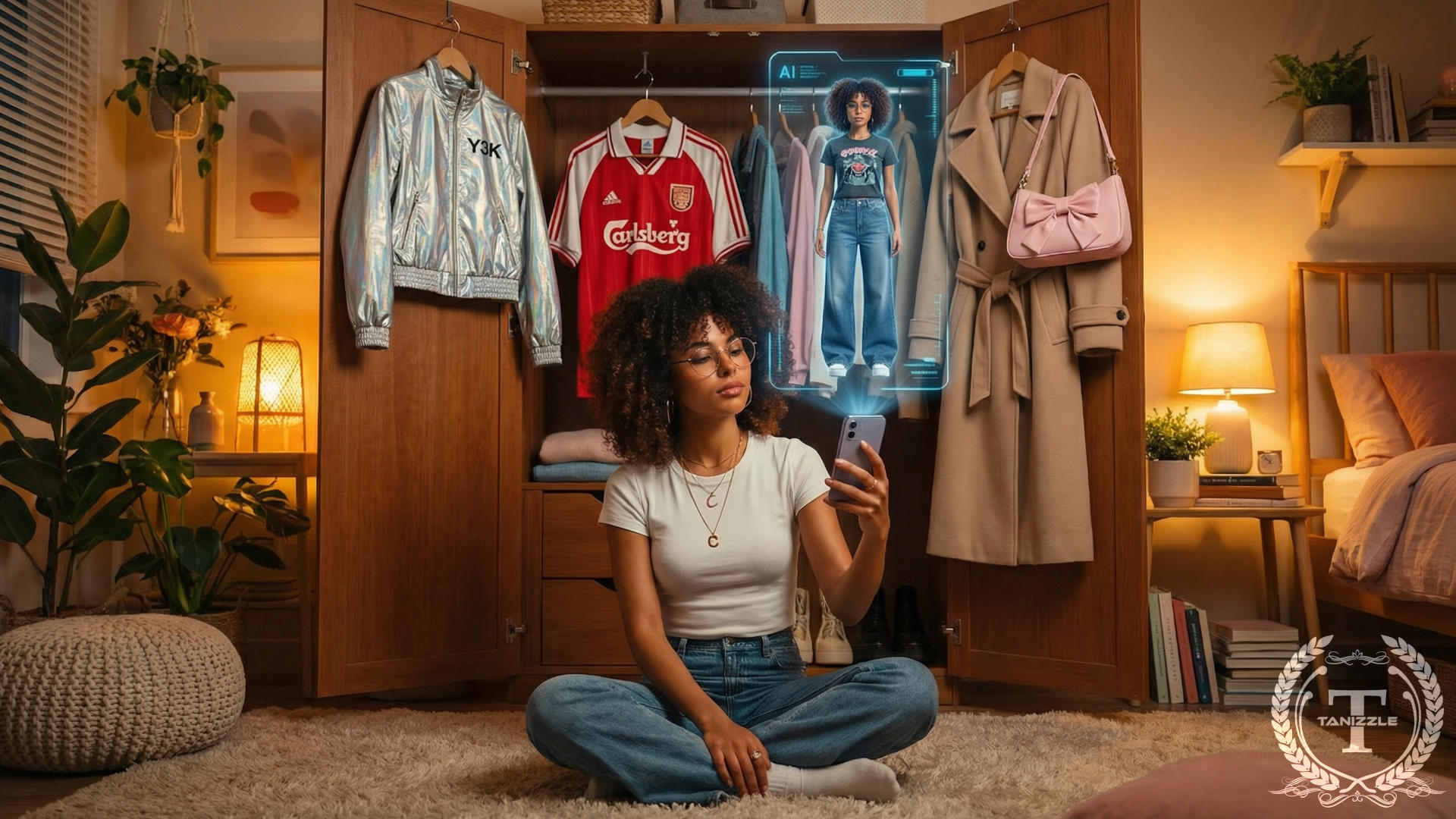
Then there's the part where your clothes literally don't finish loading until your phone camera sees them.
Semi-digital or "phygital" clothing blends physical garments with augmented reality layers. FFFACE.ME, an AR innovation studio, describes semi-digital clothing as pieces that unlock extra digital elements - animations, textures, graphics - when viewed through TikTok or Snapchat filters.
Bershka's recent collaboration with FFFACE.ME pushed this into the mainstream. Their semi-digital jeans come with a QR code that launches a TikTok effect responding to the fabric's texture, adding a dynamic digital layer over the denim. The entire format is explicitly designed for people who regularly create content and use clothing as part of their visual identity.
In other words, the jeans are fine in real life - but they're built to reach their final form on camera. The "full outfit" only exists once the phone is involved.
This is phygital drip: when your fit is low-key in person but insane once the AR layer kicks in. Offline, you look put together. Online, you look like a cutscene.
It's the same logic sitting behind smart glasses, AI-powered accessories and wearables we broke down in "What Are The Best Smart Glasses?" and "The Best 2025 Predictions About Tech x Entertainment x Fashion The body is becoming an interface. Clothing is becoming an activation surface. And content is the final output.
Digital Twins, AI Mirrors And The "Feed-Safe Self"
The more your clothes are filtered through screens, the more you start using screens to choose them.
AI wardrobe tools and styling apps are increasingly building "digital twins": avatars or model stand-ins that look like you, dress like you and try on outfits on your behalf. Users in fashion and capsule wardrobe communities already talk about apps that generate an avatar in their proportions and then assemble looks from their closet or potential purchases.
You take photos of every piece you own. The app digitises them, predicts what flatters you, then suggests looks based on mood, weather, calendar and vibe. It's convenient and weirdly intimate. Over time, your digital twin evolves into your most "optimised" version: the best angles, the cleanest silhouettes, the most flattering palettes.
What happens next is subtle. You start dressing to match that version.
When you stand in front of the mirror, you're not just asking "do I like this?" You're asking "does this look like the version of me my feed recognises?" You already know which outfits do well on camera, which combinations get compliments, which cores you "belong" to online.
So you maintain multiple selves: the quiet luxury you for Instagram; the blokette you for TikTok; the NPC hoodie you for days you can't be bothered to perform; and maybe a Y3K avatar of you inside a game or metaverse-coded space.
If you've read "what's AI stylists?" you've already seen how AI is being positioned as both designer and personal assistant. Combine that with the identity drift of why people don't feel like themselves, and you get the new reality: your digital twin is no longer just a tool. It's slowly becoming the version of you that your wardrobe reports to.
Are You Dressing For Yourself Or For The Interface?
At this point it's easy to say "this is bad" and call for everyone to go live in a cottage with zero Wi-Fi. Tanizzle is not here for that. We are pro-tech and unapologetically pro-aesthetic. Dressing for your feed can be fun. Core culture can be creative and liberating, especially for people experimenting with gender, identity and mood.
But.
There's a difference between using aesthetics as a playground and letting them become a prison.
If you feel like you can't step out in anything that doesn't match your core because it will "ruin your grid," that's not style, that's UI anxiety. If you find yourself rejecting outfits you genuinely love because they "don't photograph well," that's not taste, that's performance management. If you never try something new because you're scared your followers won't recognise you, that's not cohesion, that's branding trauma.
Sometimes your outfit matching your feed is harmless alignment: the same person online and offline. But sometimes your feed starts dictating what outfits are "allowed" based on what got the highest engagement last month. Your wardrobe becomes a slave to yesterday's metrics.
The same energy we talked about in regarding content creators and burnout applies here. It's the burnout of performing the same persona over and over because you're scared the numbers will punish any deviation. This time, the pressure doesn't just live in your content. It lives in your closet.
So ask yourself the uncomfortable question: if no one could see your outfit today - no selfies, no stories, no photo dumps - would you still pick the same one?
Tanizzle Says: Stop Dressing Like A Hashtag, Start Dressing Like A Human
Your wardrobe isn't innocent anymore. It's part of an ecosystem that includes trend trackers, AI stylists, AR agencies, data scientists and recommendation engines. Y3K metallics, blokecore jerseys, quiet luxury trenches, coquette bows, phygital denim - all of it feeds the same loop. Your style is content. Your content is data. Your data comes back as more style suggestions.
Matching your outfit to your feed isn't automatically a crime. Sometimes it's satisfying. Sometimes it's strategy. Sometimes it's pure play. The problem starts when your closet feels like it's owned by the interface. When the question "Do I like this?" quietly gets replaced by "Will this perform?"
The future of fashion is not going to be less digital. Smart glasses will get smarter. AR try-ons will go mainstream. AI stylists will be built into the same devices you already use to text. Semi-digital clothing will move from collab novelty to everyday option. None of that is going away.
The real flex is not pretending you're above it. The real flex is staying conscious in the middle of it. Use the cores. Wear Y3K on Tuesday, blokette on Thursday and NPC sweats on Sunday if that's your mood. Let your avatar test chaos outfits so you don't have to. Play. But remember that your feed is supposed to be an output of your life, not the operating system for it.
It's fine if your outfit matches your feed. Just make sure your feed still matches you.
Tanizzle Style FAQ: Outfits, Feeds And Algorithms
What does it actually mean for my outfit to "match my feed"?
When we say your outfit matches your feed, we mean your clothes are aligning with the visual identity you've already built online: your colour palette, your "core," your usual silhouettes and the way you present yourself in photos and videos. People who live in beige quiet luxury fits on Instagram, for example, tend to keep their offline wardrobe in the same lane so the selfies never clash. TikTok users who lean heavily into Y3K, blokette or coquette aesthetics do the same. The result is that your wardrobe and your online persona become tightly synced, almost like you're designing a character skin rather than just getting dressed.
Are trends like Y3K, blokecore and quiet luxury actually algorithm-driven?
Partly. These aesthetics didn't appear out of nowhere. Y3K, for example, has been boosted by TikTok and fashion media as a futuristic, tech-leaning evolution of Y2K, with metallics and dystopian silhouettes designed to look striking on camera. Blokecore and blokette moved from niche football and streetwear circles into mainstream fashion after being amplified on TikTok and by brands like Adidas. Quiet luxury, meanwhile, fits perfectly into platforms' preference for clean, aspirational, brand-safe visuals. Algorithms don't "invent" trends, but they massively accelerate and reward the ones that produce high engagement and low controversy.
What is "phygital" or semi-digital clothing, and why does it matter?
Phygital or semi-digital clothing refers to garments that exist physically but unlock extra digital effects when scanned with a phone or viewed through specific filters. FFFACE.ME describes semi-digital pieces where TikTok or Snapchat filters add animated layers or graphics on top of the fabric. Bershka's semi-digital jeans, built with FFFACE.ME, use a QR code to trigger an effect that reacts to the denim in real time. It matters because it turns clothes into interactive content - outfits that are literally designed to be completed by the camera, not just the mirror.
Is it bad that I sometimes dress for social media instead of "just for myself"?
Not automatically. Nearly everyone mixes those motivations now. It becomes a problem when you feel like you never have permission to dress off-brand - when every outfit has to be "postable," when you're scared to try new styles because they might not fit your grid, or when comfort and genuine self-expression always lose to aesthetics that "perform." Dressing for the feed sometimes is just modern life. Dressing only for the feed is when the interface starts dressing you back.
Are AI stylists and wardrobe apps going to replace my personal style?
They'll shape it, but they don't have to own it. AI styling apps already recommend outfits based on what you own, your body type and your preferences, and some even generate avatars that model looks for you. These tools can be useful, especially if you struggle with planning fits or want to shop smarter. The risk is letting them narrow your choices to what performs best statistically instead of what feels best on you. Treat AI stylists like helpful shop assistants, not like gods of taste. The final word on your drip still belongs to you.