
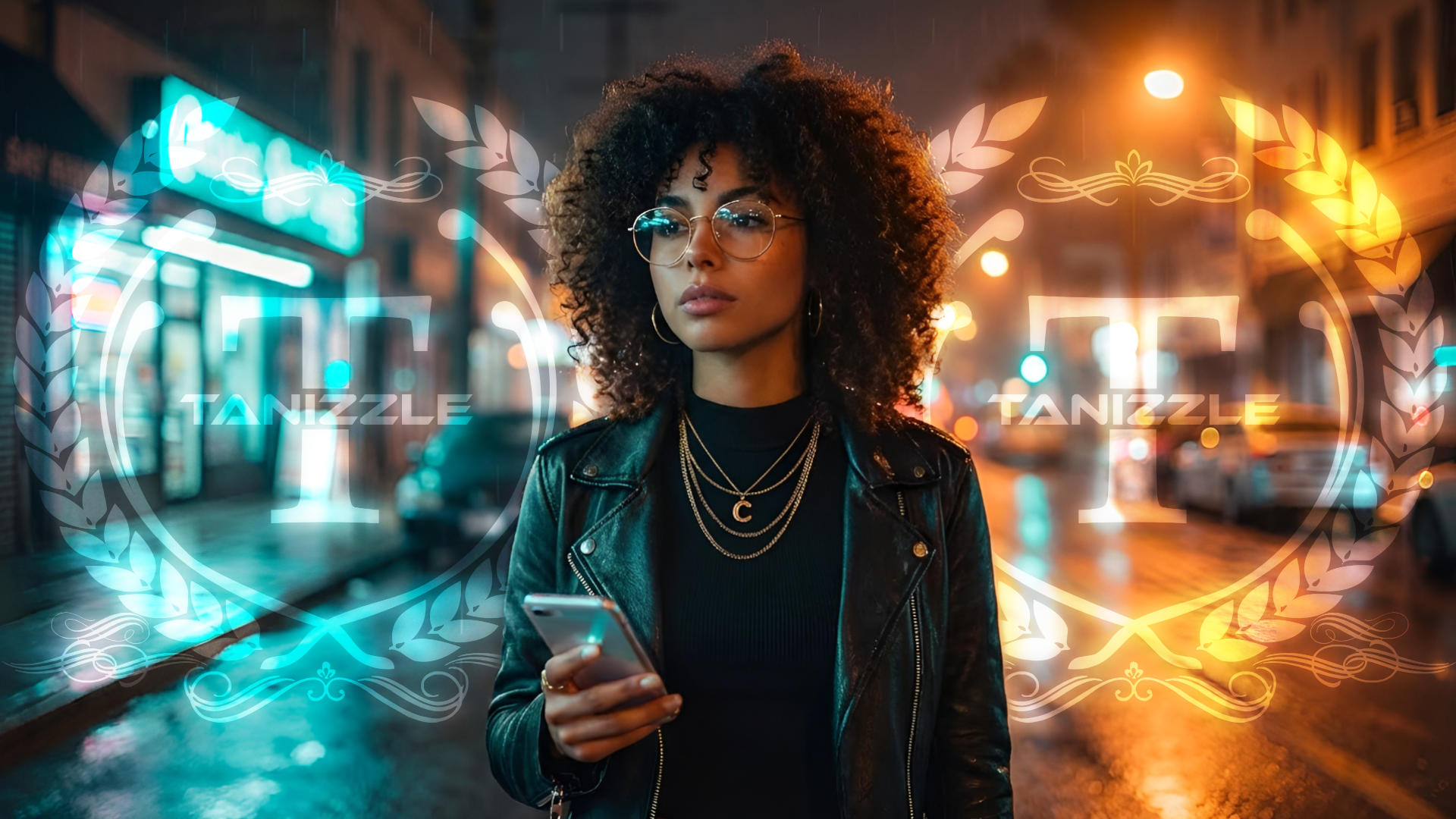
You don't feel like yourself anymore because your identity is being split between algorithms, avatars and endless feeds. Here's the real reason you feel off - and how to take control again.
You Don't Feel Like Yourself Anymore - You're Not Broken, You're Updating
You ever tell yourself "I'm just going to lie down for five minutes", and wake up three hours later, phone burning your hand, brain buzzing with 50 random thoughts that didn't start with you?
You watched a war, a wedding, a breakup story, a 0.5 selfie dump, three productivity tips you'll never use, and a Corecore edit that somehow made you nostalgic for a life you never lived.
Then comes that weird floaty moment: "I don't feel like myself anymore" or a moment remotely close to it?
Here's the plot twist: You don't feel like yourself because your "self" is currently scattered across timelines, group chats, comment sections, and Tanizzle: 4-Thought is here to help you understand.
1. The New Symptoms: Brain Rot, NPC Energy & Bed Rotting As a Lifestyle
Let's start with the vibes. Because that's what you're Googling at 2:47am.
- Brain Rot - That swampy, fuzzy feeling after consuming low-value content for way too long. Not just boredom - it's like your brain is buffering between 100 unfinished thoughts.
- Bed Rotting - You're not in bed to rest. You're in bed to disappear. Horizontal, phone up, lights off, soul on airplane mode.
- NPC Energy - When your life feels like background gameplay to everyone else's main character storyline. You're there, but not there.
- Main Character Energy - The opposite fantasy. A hyper-edited idea of yourself that shows up in your head and in your drafts, just not in your actual decisions.
- Doomscrolling - Still undefeated. You scroll, you suffer, you refresh, you repeat. The algorithm hands you fresh anxiety on tap.
- Delulu - The "delusion is the solution" era. You lean into fake realities (imaginary scenarios, parasocial relationships, "one day" fantasies) because real life feels laggy.
- Goblin Mode - Full rejection of aesthetics and expectations. Hoodie, crumbs, no skincare, no shame. The anti-Instagram self.
- Corecore - Those chaotic, emotional video collages that somehow understand your existential dread better than your family does.
These aren't just jokes or trends. They're symptoms of a bigger problem: You're trying to operate a 2025 nervous system on identity software written for a pre-smartphone world.
Tanizzle Take: Brain Rot isn't always decay. Sometimes you're not rotting - you're defragging. The real issue is you never hit reboot.
2. Algorithmic Anxiety: When Your Identity Is a Recommendation Engine
Here's where it gets uncomfortable.
There's a phrase for the dread you feel when you realise your "choices" are suspiciously predictable: Algorithmic Anxiety.
That creeping sense that your:
- music taste
- political opinions
- body image
- aesthetic
- attention span
...have all been quietly co-designed by black-box systems you never agreed to understand.
- Every scroll trains something.
- Every like labels you.
- Every second of watch time feeds a model that goes: "Cool. Give them more of that."
Over time, you don't just get recommendations - you get reinforcement:
- You're angry? Here's more outrage.
- You're insecure? Here's more faces to compare yourself to.
- You're lonely? Here's more couples, more friends, more lives you're not living.
Your identity stops being something you build on purpose and starts becoming something you confirm by habit.
That's where Hypoidentity creeps in: A weak sense of self because everything is pre-selected for you. You're not deciding who you are; you're coasting on whatever the system thinks "people like you" enjoy.
Add in Fragmented Self on top:
- LinkedIn You
- Close Friends Story You
- Burner Account You
- Discord You
- Family Group Chat You
All real. All partial. No wonder the phrase "I don't know who I am anymore" is trending in the collective subconscious.
Tanizzle Take: The modern self isn't one clean "I". It's a group project between you and five algorithms that never sleep.
3. Avatars, Filters & Avatar Dysmorphia
Now let's talk about the body you think you live in.
We've reached the era of Avatar Dysmorphia - when your physical face and body feel wrong because your filtered, edited, AI-boosted self looks better, smoother, more "you" than, you.
You curate:
- FaceApp selfies
- AI portrait packs
- game avatars
- VTuber rigs
- AR filters that reshape your nose and jawline by default
And then the mirror has the audacity to be, honest.
It's not just "I look bad today."
It's "I don't match the version of me that lives in my phone."
That gap creates a low-grade identity tension:
- Your avatar gets compliments.
- Your real face gets insecurity.
- Your brain logs the difference.
On top of that, we're training Digital Twins of ourselves without realising:
- Your playlists
- Your watch history
- Your shopping cart
- Your late-night searches
...are building a data-double - a version of you that machines can model, predict, and influence.
In some ways, your Digital Twin (sounds like your smartphone) knows your true preferences better than you do. It remembers everything. You don't.
Tanizzle Take: You don't just have body dysmorphia. You have timeline dysmorphia - the version of you online is better edited than anything your bathroom mirror can render.
4. Derealisation, Depersonalisation & the "Is Any of This Real?" Glitch
Searches for derealisation and depersonalisation have exploded. These are clinical terms, not memes:
- Derealisation - the world feels fake, distant, dreamlike.
- Depersonalisation - you feel unreal, like you're watching yourself from outside your own body.
Do we blame the internet for everything? No.
But we're also not going to pretend living in 10 realities a day has zero side effects.
You rotate between:
- your room
- your FYP
- your games
- your DMs
- your work chat
- your fantasies
...so fast your nervous system can't always tell which one is the primary reality.
When everything is content, nothing feels grounded.
When every moment can be replayed, filtered, captioned, and stitched, you start living life like future footage, not present experience.
No wonder you don't feel like yourself. You rarely stay with yourself long enough to recognise who that is.
5. The Post-Digital Self: You're Not Meant To Be Just One Thing
Here's where we flip the script.
You're not broken for feeling different. You're post-digital.
The old model was simple:
- Real life vs Online life
- "IRL you" = real
- "Online you" = fake
That's dead.
Welcome to the Post-Digital Self:
- Your online and offline identities are fused.
- Your memories live in camera rolls, archives, saved sounds, and screenshots.
- Your "presence" isn't just where your body is - it's where your focus is.
You're already practising Meta-Identities:
- chill friend in the group chat
- ruthless try-hard on LinkedIn
- chaos gremlin on your Finsta
- quiet lurker in fandom spaces
That isn't fake; that's contextual. Different environments, different versions - same core.
And now we've upgraded "screen time" to Extended Reality (XR) Presence:
- VR hangouts
- Fortnite concerts
- Roblox worlds
- virtual events
- AI-generated rooms and worlds
Your brain logs these as experiences, not just pixels. That's why nostalgia for "places that never existed" suddenly makes sense.
Tanizzle Take: You don't feel like yourself because you're still expecting one fixed, static identity in a world built on skins, presets and updates.
6. From Hypoidentity to Hyperagency: Becoming an AI Native Explorer
So what now? Do we throw the whole internet away and go live in a forest?
Cute idea. Not happening.
The answer isn't "touch grass" memes and digital detox guilt trips. The answer is agency.
Two paths:
Path 1: Algorithm Victim
- You scroll on autopilot.
- You believe every feeling is random.
- You accept whatever the feed serves.
- You complain about tech while using it 10 hours a day anyway.
Path 2: AI Native Explorer
- You treat feeds like a diet, not destiny.
- You curate inputs the way you curate outfits.
- You use AI to think with you, not instead of you.
- You design your identity with intention, not accident.
Practical flips:
- Instead of doomscrolling, you journal with AI and ask: "What patterns do you see in the things I keep complaining about?"
- Instead of chasing endless aesthetics, you define 3-5 core values you refuse to compromise on: creativity, honesty, autonomy, connection, whatever your flavour is.
- Instead of trying to "find the real you," you accept you're a stack: core values = OS, different personas = apps, and platforms = environments
All valid. All you. The power move is deciding who's in charge.
Tanizzle Take: You don't need a digital detox. You need digital discipline. Less "I'm addicted to my phone," more "I'm the one configuring this reality."
7. So, Why Don't You Feel Like Yourself Anymore?
Because "yourself" got an update and no one gave you the patch notes.
You're:
- living across multiple realities
- juggling multiple identities
- training multiple AI systems
- consuming more information in a week than previous generations did in months
Of course you feel off.
Of course you feel fragmented.
Of course you feel like you're watching your own life instead of living it.
The goal is not to roll back to "the old you" from 2015. That version of you didn't have the range for the world you live in now.
The real move is to:
- decide what your core actually is
- accept that you'll always have multiple versions
- use tech as a tool for self-definition, not a mirror that tells you who you're allowed to be
You don't feel like yourself anymore.
Good. That means you've outgrown the last version.
The question now isn't "How do I get back to who I was?" It's: Who do you want to be - now that you know the system you're living in?
Tanizzle Says: Who's In Control?
You're not glitching. You're updating. Just make sure you're the one holding the controller.